No one likes to learn they need a filling during a routine dentist appointment. But it's not out-of-the-ordinary news.
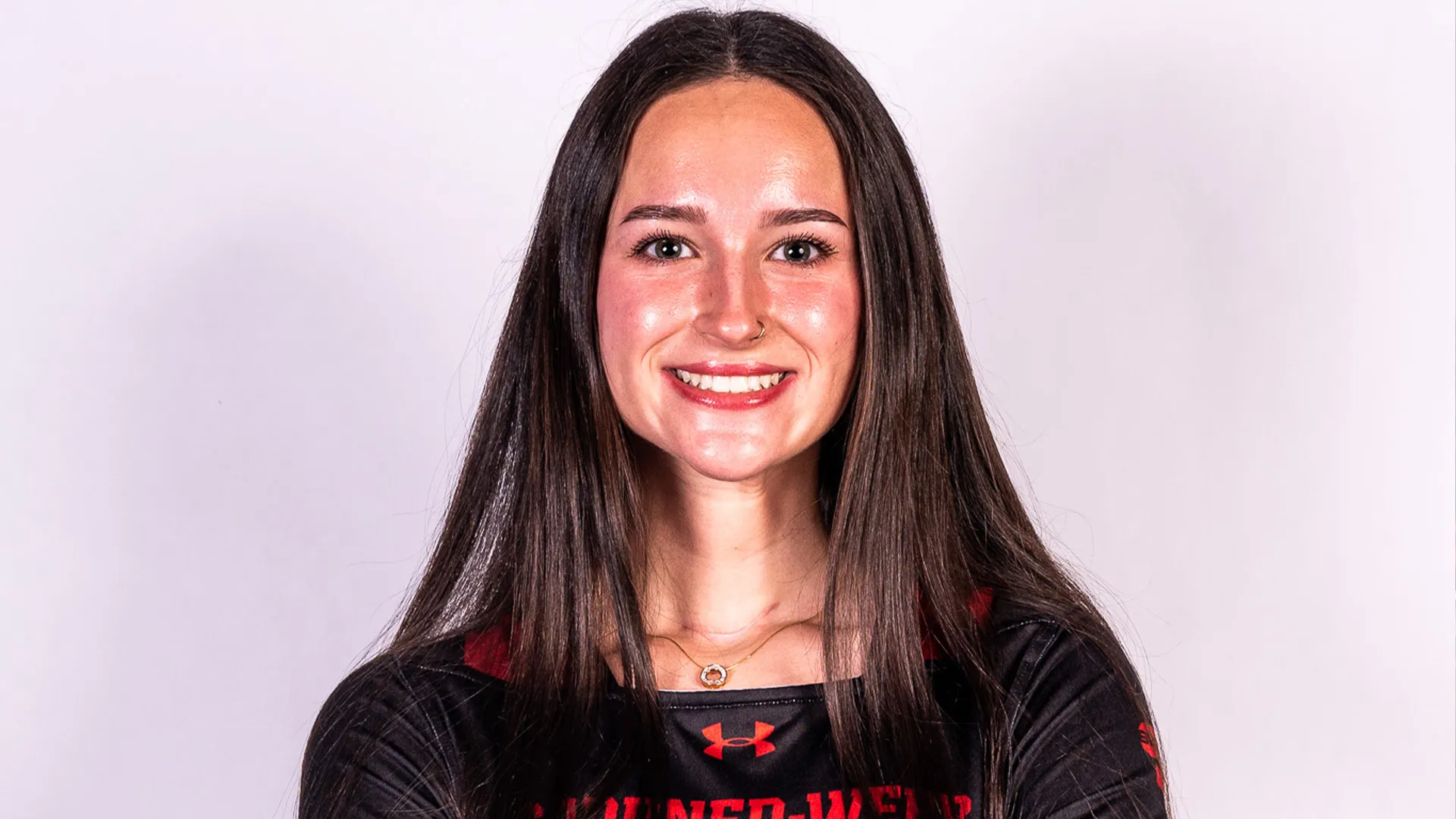
Less than two months before leaving California for her freshman year at Gardner-Webb, where she was slated to play lacrosse, Andrea Hartman's dental hygienist did, in fact, tell her she would need to have a cavity filled. But on three separate occasions, the hygienist also mentioned that Hartman’s thyroid was swollen. She advised her to get it checked out.
“I didn't know anything about the thyroid,” Hartman said. “The only thing I knew was that my dog was having weight issues and that it was because her thyroid was not working. So, my initial reaction [was] not initial panic.”
But Hartman did want to get it checked out. She had no idea that a few months later, and at the age of 17, she'd learn that she had thyroid cancer. What Hartman did know was that she was no stranger to bumps in her athletic career. She spent her early childhood and school years in Maryland, where kids are basically handed out lacrosse sticks at birth.
Many of Hartman's friends never put theirs down, but Hartman opted to start gymnastics. In middle school, she was diagnosed with osteochondritis in her elbow. The joint condition occurs when blood circulation is cut off from a bone (or, as Hartman said, “My bone died in my elbow”).
Hartman didn't go back to gymnastics. Instead, she joined her friends in lacrosse. But her family decided to move to California during the pandemic. California is an emerging market for the sport, but it doesn't have the same panache as Maryland. She made do, finding a high school with a solid program in Murrieta Mesa.
Still, Hartman didn't get many Division I looks. Eventually, then-Gardner-Webb head coach Kathleen Mirgon Crum’s name appeared in her inbox.
“I was like, ‘Oh my gosh, my first D-I email — this is so cool,” Hartman recalled.
Hartman and Crum spoke on the phone and texted back and forth. She visited the campus in November and attended a camp a few months later.
“It was Gardner-Webb from there,” Hartman said.
“
This diagnosis came at a moment when she was just beginning to fully believe she belonged at this level, and that made the fear feel even heavier
Before going to Gardner-Webb, Hartman had a cavity to fill, and she had items to pick up from an uncle's house in Maryland. Another dental hygienist also flagged her swollen thyroid, so she saw an old family doctor there who ordered blood work. It came back clean.
But the bump was still there when she needed to get a physical upon arriving at school. She brought it up to the doctor, who encouraged her to come back in a few days to discuss it further.
“We decide that it's worth it to get an ultrasound,” Hartman said. “At this point, it was so big, I guess that it wasn't just a swollen thyroid. It was like, ‘There's something there. There's something like growing.’”
Was it a cyst? A nodule? Was it cancer? The ultrasound in September couldn't say for sure, but Hartman's care team could see that something was there. To learn more, she’d need to go for a biopsy. That step happened in October.
All the while, Hartman was participating in fall practices for the lacrosse program, now guided by head coach Chris Harris, who took over for Crum after she resigned in 2024. He liked what he saw of Hartman on film alone.
“She was very responsive to everything, so I could tell that she was a mature young lady who was ready to roll,” Harris said.
Ready to roll on the lacrosse field? Sure. Ready to roll with what happened next? Not really. But to be fair, is anyone?
A week after the biopsy, Hartman got a notification that her lab results were ready, but she was unable to log in on her phone. She called the doctor's office.
“The secretary answers, and is like, ‘You need to come in and make an appointment. I can't tell you anything about the results. You have to make an appointment,” Hartman said. “My mom and I hang up the phone, and we're like, ‘We kind of know what this means.’”
The Hartmans were pretty sure that the secretary wouldn't insist that they speak to the doctor in person if it wasn't cancer. They were right. She was diagnosed with stage II papillary thyroid cancer. It was treatable with surgery, and she would not need chemotherapy.
And if there's one thing that Megan Hartman, Andrea's mom, knows all too well, it's cancer. She herself has a BRCA2 gene mutation and had a preventative mastectomy. Her uncle had thyroid cancer later in his life.
Other members of her family have gone through glaucoma, lung cancer and ovarian cancer, just to name a few. It was a diagnosis she had heard about so many times but never wanted for her own daughter, of course.
“It was scary for a lot of reasons, but mostly because there's such a high rate of cancer,” Megan Hartman said. “There's such a high rate of cancer and so many different kinds of cancer in our family and this is something she now has to deal with at 17. That was really concerning for us.”
It would be easy to say, “Put lacrosse on the back burner and focus on healing.” Yet there was a healthy amount of grief and angst over the cruel timing of Hartman learning of her diagnosis and the need for treatment right as she was getting her feet under her at school and in lacrosse, after an underdog's journey to become a Runnin’ Bulldog in the first place.
“This moment collided with something she had worked toward for so long,” her mother said. “She worried about getting out of shape, letting her team down and watching her dreams slip away just as they felt within reach. This diagnosis came at a moment when she was just beginning to fully believe she belonged at this level, and that made the fear feel even heavier.”
The Runnin’ Bulldogs didn't feel let down, though. So, Harris steadied her. Her team lifted her.
“After I talked with her, I actually just sat down and just prayed about it, because it's not an easy process,” Harris said. “But I wanted to make sure I was she knew that we were there for her and we were going to be with her every step of the way, no matter what the situation, whatever the results.”
Those words were a genuine promise that Harris and Gardner-Webb kept.
“The team rallied around Andrea,” Megan Hartman said. “The coaches were so kind to her and flexible with her. The parents were absolutely amazing. We've been on teams for decades now, and I've never felt so supported by people who honestly didn't even know us. They offered their homes for me to stay in so that I could be in North Carolina with her through all the appointments.”
Parents and players brought groceries so that Hartman and her mother were well fed. They sent gift cards and baskets and celebrated with her after the surgery, which conveniently and appropriately fell near her 18th birthday.
But Hartman had a few months and a long road before she hit that milestone. And all the support was necessary. It took decisions and to-dos off the Hartmans' plates, which were already overflowing with choices to make, appointments to attend, and information to process and act on quickly.
The first step was choosing a surgeon. They opted to work with a surgeon at Atrium Health Levine Cancer Proton & Advanced Radiation Center because of its proximity to campus.
“It made the most sense to us to do that, but that was stressful,” Hartman said. “You're picking your surgeon. Hopefully, they do the best.”
Then, there was a matter of scheduling the surgery, which required a referral and consultation.
“I was feeling like, ‘It's already been nearly six months. I want this out. It's stage II. Let's not make it stage III,” Hartman said. “My coach did a really good job of keeping me calm. He said, ‘Don't worry. If it were, if it were this big of a rush, they would be rushing.’”
The goal wasn't to minimize her understandable fears. It was to provide steady confidence and unwavering support.
The next steps took a hard pivot when Hartman’s surgeon offered her another choice. She could remove half her thyroid as planned or all of it to lower the risk of recurrence.
“I was like, ‘Wow, another big decision,’” Hartman said.
A big decision complicated by some serious whiplash.
“The same day, we go into a different office, and we see the endocrinologist, who is the doctor who's going to be with me for the rest of my life, and she said, ‘We recommend you get only half out, because there's no need to get the other half out,’” Hartman said. “So, it was like, ‘OK, I have a surgeon telling me to get the full thing out. I have my doctor telling me to get half. This is just a lot.’”
In the end, Hartman opted to have her entire thyroid removed. The surgery was successful, but the first night was sleepless for Hartman and her mother as she struggled to maintain calcium and hormone levels, a common but scary side effect.
“She was convulsing, and it was incredibly, incredibly scary for me as a parent,” Megan Hartman said. “[The staff] knew exactly how to take care of her. There were definitely points where I was really, really scared and uncomfortable with what was happening, but very confident in her medical team.”
The confidence was well placed. The doctors tested lymph nodes that would not have been removed if Hartman had opted for the less-comprehensive surgery, and they turned out to be cancerous, too.
She will complete preventative radioactive iodine treatment this summer, once the lacrosse season ends. Leaving the game that she's come to love behind? Never an option.
“Quitting lacrosse never crossed my mind,” Hartman said. “I think having to take six weeks off was difficult.”
But she’s grateful for the timing, which “only” included the last two weeks of fall ball. The other four weeks occurred during holiday and winter breaks, giving her time to work her way back.
But unlike an ACL injury, which typically takes around 18 months to fully return from, there’s not a blueprint for making a comeback from thyroid cancer. Perhaps surprisingly, though, it's much shorter than an ACL tear recovery.
The doctor suggested that she avoid heavy weightlifting for two weeks and progressively work her way back up after. They told her she'd likely be good to go after six weeks. Hartman wasn't just good to go. She was ready.
“It made me realize how much I loved lacrosse,” Hartman said. “Fall ball is hard, so I was craving winter break. Then, had that last little bit of fall ball taken away from me, and I was like, ‘The only thing I want to do right now is go back to being on the lacrosse field, practicing at 6 a.m. in the freezing cold weather.’ When Coach says, ‘Get on the line,’ I'm grateful to be on the line.”
“
It made me realize how much I loved lacrosse.
Hartman's gratitude isn’t all that's grown. She has, too.
“She truly had to grow up quickly,” her mother said. “She now manages much of her own medical care, communicates directly with doctors, tracks appointments and makes decisions about her body and recovery in a way most teenagers never have to. There were moments where she was forced to process uncertainty, timelines and decisions like an adult. That experience didn’t change who she is, but it deepened her sense of responsibility, self-advocacy and perspective.”
Hartman’s strength has poured out onto the field. In January, Andrea played like she had a fall, free of doctor’s appointments, a cancer diagnosis and missed practice time. She was finally able to play freely.
“When she came back, she was hitting the ground rolling,” Harris said. “We put her in, let her get a couple of reps, just to build her back into the play. Then, once she'd shown she could take on more responsibilities, we just put her in bigger situations, and she was able to handle them as well.”
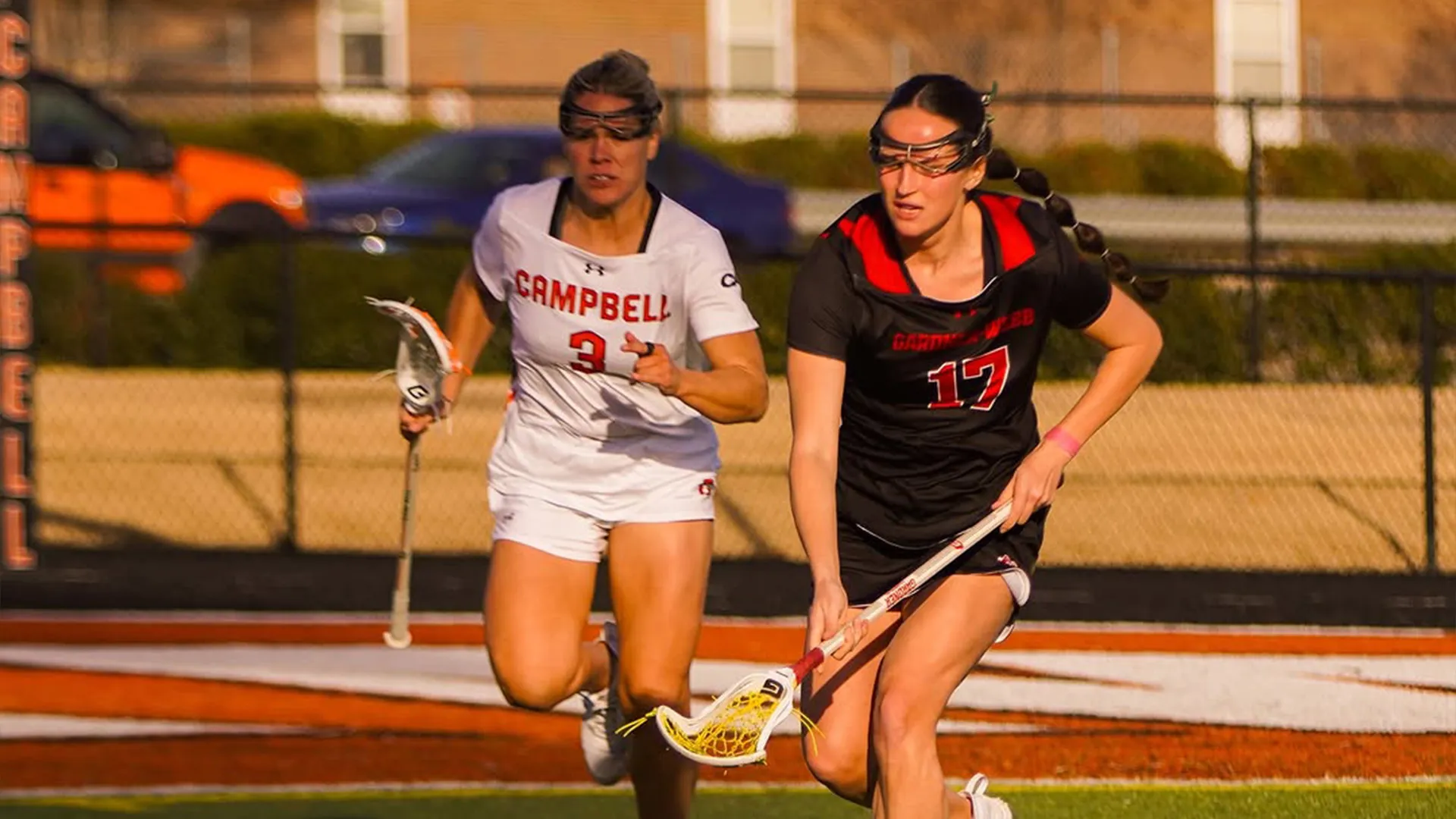
And so, Hartman learned that she’d start on defense for the Runnin’ Bulldogs first game of the season against Austin Peay. She again earned a start at Campbell.
“I was proud of myself for coming back in those first few practices of spring and doing well,” Hartman said. “I had worked hard over winter break to build back up to everything. It paid off. When I got to practice, I was doing well. [I started] our first scrimmage and was like, ‘It’s all working out. Everything is going to be OK.’”
Gardner-Webb is 0-2 heading into Thursday afternoon’s game at Kennesaw State, but Harris sees a bright future for Andrea as a Runnin’ Bulldog.
“We're excited about the way she's going to grow for this year and years to come,” he said. “In the years to come, she'll be one of the ones who could teach the freshmen, ‘This is what we do. This is how we go about doing things, and this is the way we play.’”
Hartman has certainly shown she can play through adversity with grace. But the starting spot wasn’t the best news Hartman and her family received recently, nor is it the only reason to believe her future is, in fact, bright.
Given her family history and now her own history of cancer, Hartman decided to go for genetic testing to see if she had biomarkers for other cancers.
“She tested negative for every single genetic marker, for every single type of cancer in our family and every single type of cancer that they even have a genetic marker for,” her mother said. “She tested negative.”
Does it mean she'll never receive another diagnosis? That no one can say. But cancer has less of a fighting chance without the markers.
Hartman, on the other hand, has a fighting chance to make a name for herself and help turn around the program at Gardner-Webb.