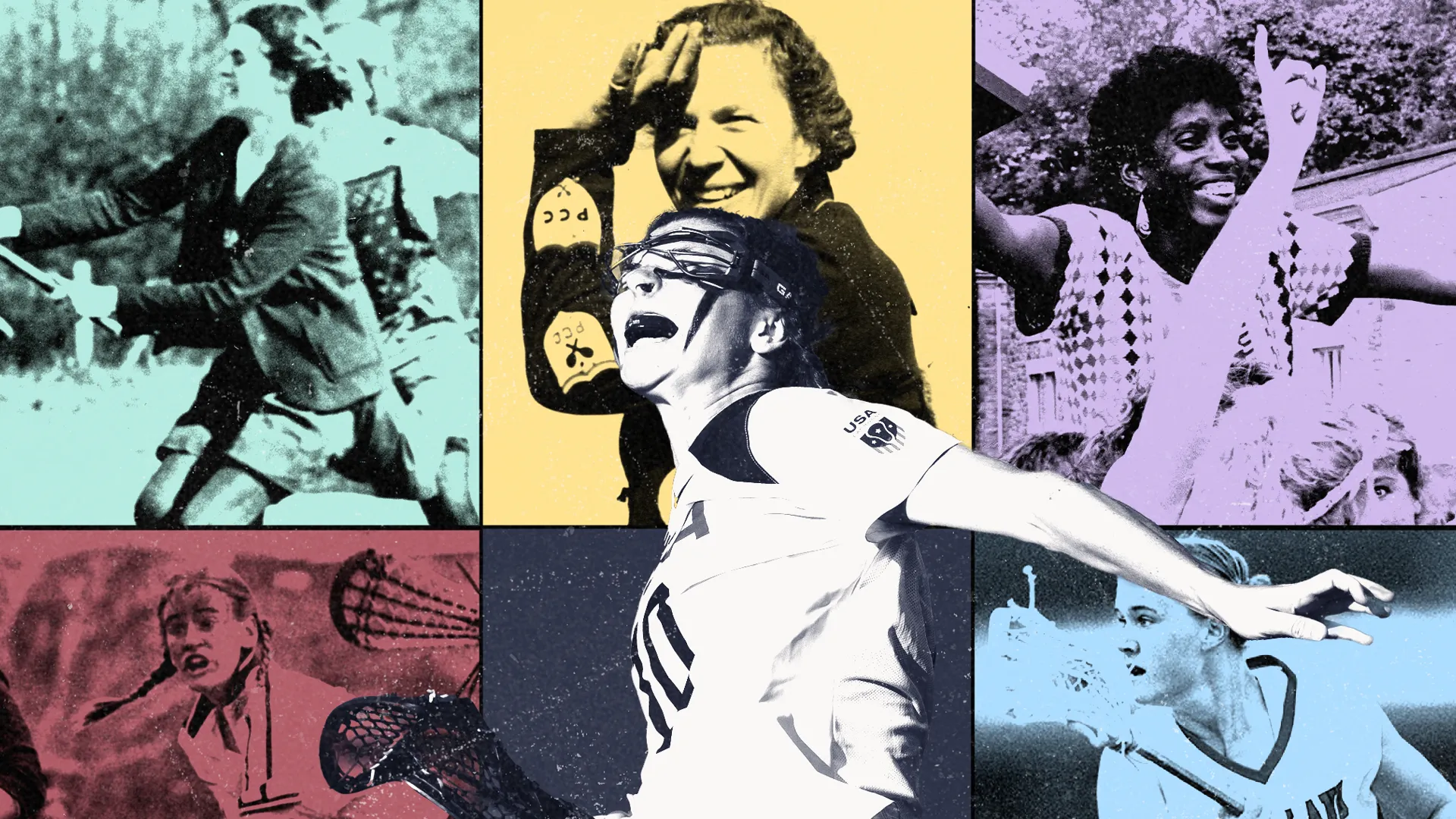
For a century, women’s lacrosse in the United States has balanced tradition and transformation. What began in 1926 at Bryn Mawr School (Md.) — an import shaped by educators and guided by amateur ideals — has grown into a nationally televised, professionally viable, globally ascendant sport. Rule changes accelerated pace. Title IX expanded access. Dynasties built legacies.
Today, women’s lacrosse sits at the intersection of momentum and opportunity — buoyed by record attendance, ESPN broadcasts, professional leagues and Olympic inclusion for 2028.
This is the story of how a game crossed an ocean, took root in American schools and colleges and evolved into one of the fastest-growing sports in the country.
Trans-Atlantic Exchange
1890-1930
Women’s lacrosse in the United States began as an import — refined, principled and distinctly separate from the men’s game in North America. Origins of the women’s game trace to 1890 at St. Leonard’s School in Scotland, where students formalized rules emphasizing skill, spacing and sportsmanship.
The game crossed the Atlantic through educators like Rosabelle Sinclair, who in 1926 established the first enduring American program at the Bryn Mawr School of Baltimore.
Early play was defined by modest equipment — wooden sticks costing $1.75 — and rules that prioritized finesse over force. Teams experimented with format, moving to 12 players in 1913, and in 1928 introduced the standing draw, replacing the ground start and subtly increasing pace.
This was an era of foundation building. Attempts to seed the sport at colleges like Sweet Briar preceded its eventual foothold in Baltimore, where school-based competition nurtured regional rivalries. Women administrators — notably Joyce Cran Barry — helped shape governance structures that would soon formalize nationally.
Most importantly, the women’s game consciously preserved its own identity. While men’s lacrosse in the U.S. evolved toward heavier contact, the women’s version codified space, positional discipline and stick skill. By 1930, women’s lacrosse in America was no longer an experiment — it was a growing scholastic sport with its own philosophy, leadership and trajectory.
Title
MILESTONES
1890 — The first known women’s lacrosse game is played at St. Leonard’s School in Scotland.
1914 — St. Leonard’s School grad Caroline Gascoigne tries to establish women’s lacrosse at Sweet Briar College in Virginia. Her attempt is unsuccessful.
1926 — Rosabelle Sinclair from the St. Leonard’s School in Scotland establishes the first women’s lacrosse program in the United States at Bryn Mawr School in Baltimore.
Building an American Identity
1931-1971
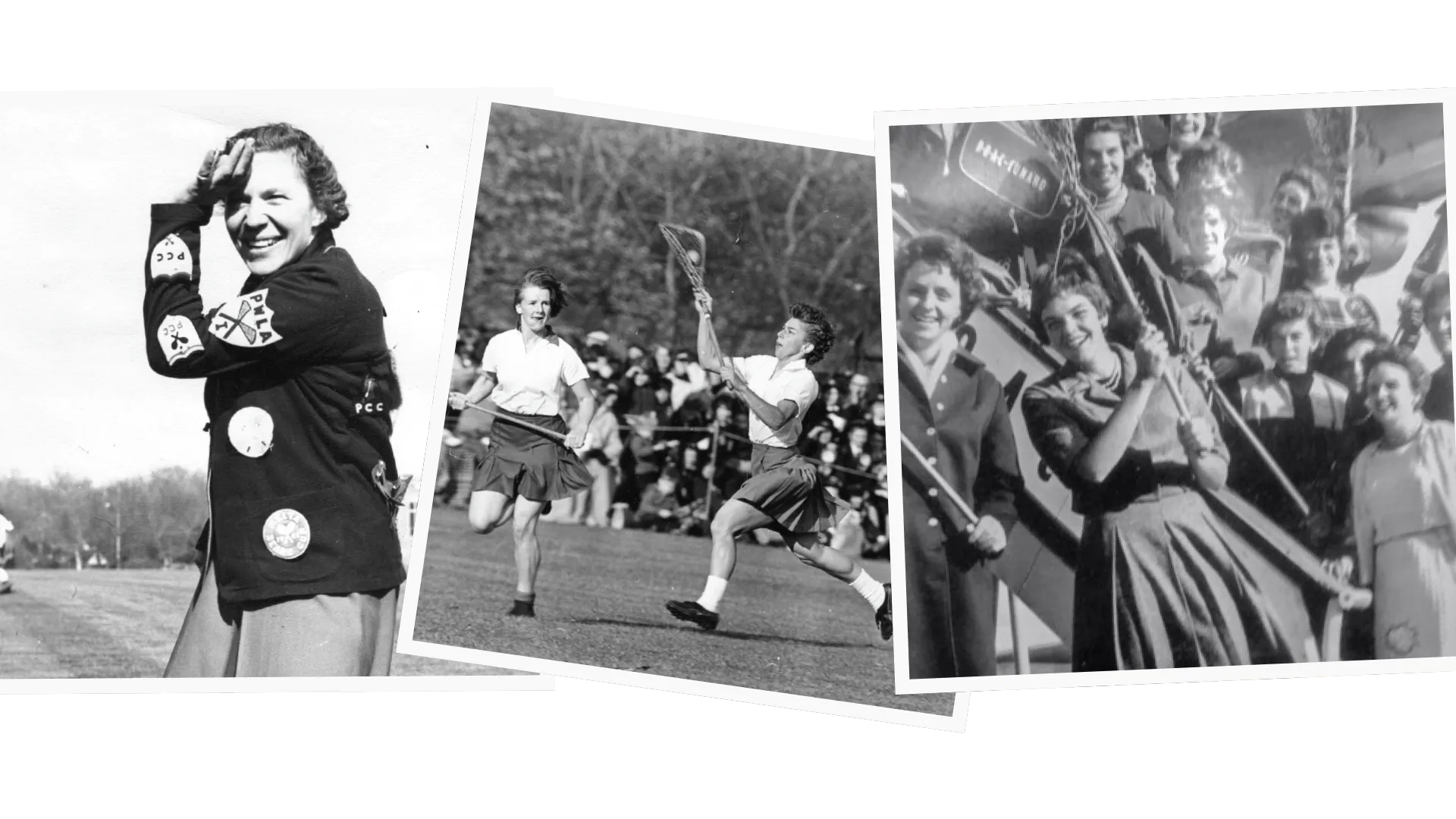
With the 1931 formation of the United States Women’s Lacrosse Association, women’s lacrosse entered its organizational age. The USWLA standardized rules, sanctioned competition and elevated what’s now the USA Lacrosse Women’s National Tournament, first held in 1933.
That same year, a U.S. national team was selected — signaling ambition beyond regional play.
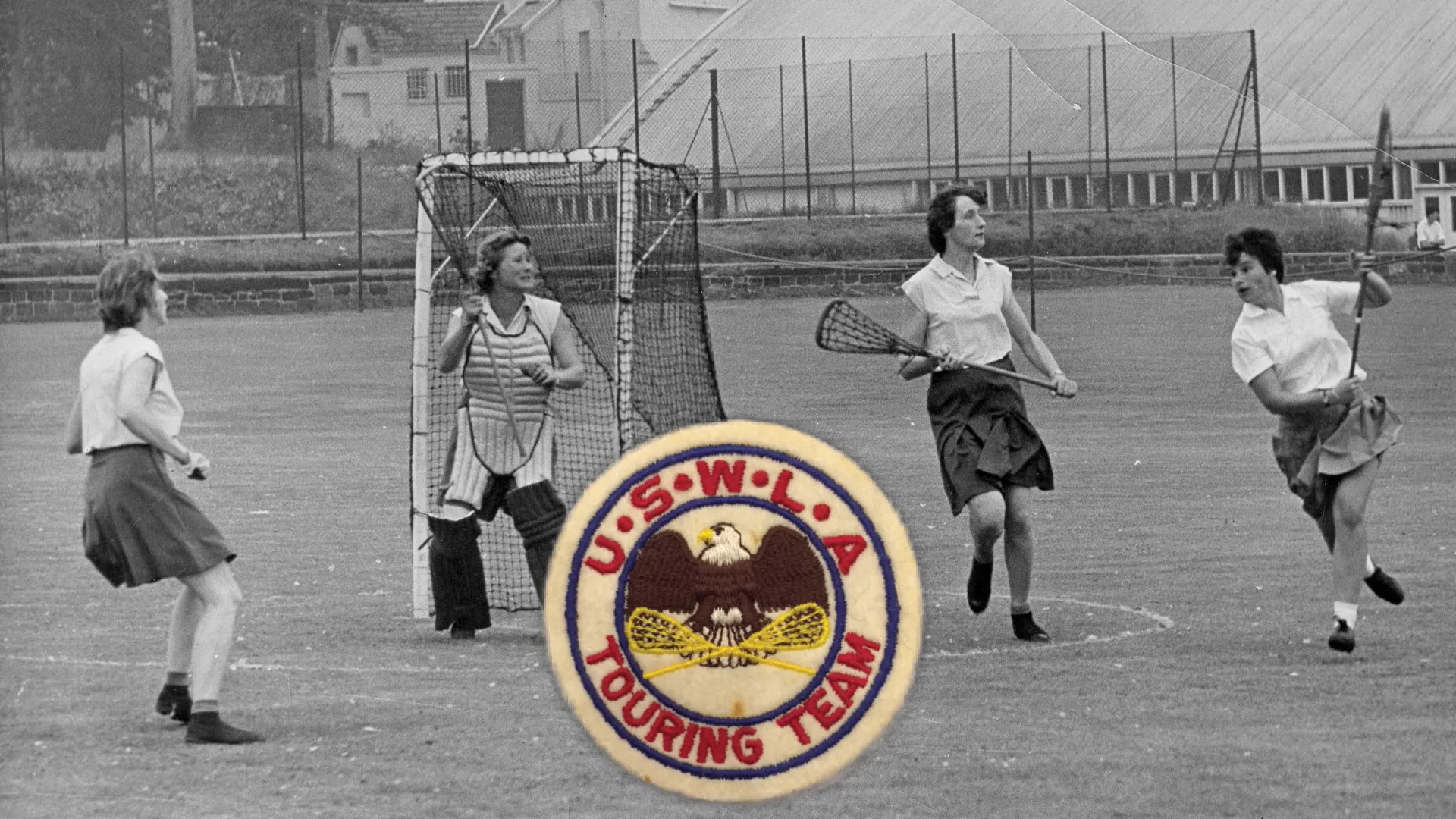
International touring soon became the sport’s proving ground. Early trips to England were humbling, but by 1951 the Americans were winning consistently abroad, traveling memorably on the RMS Queen Mary. In 1957, the U.S. touring team achieved its first undefeated campaign, earning global respect. The United States also helped catalyze growth in Australia, underscoring its expanding influence.
Rule changes reflected steady modernization. The crease evolved from square to circular in 1951, and possession rules were refined to increase flow. Yet the ethos remained rooted in amateur ideals and educational institutions. Philadelphia and Baltimore dominated domestic play, reinforcing the sport’s Mid-Atlantic heartbeat.
The era culminated internationally in 1972 with the creation of the International Federation of Women’s Lacrosse Associations, formalizing global competition. By the early 1970s, women’s lacrosse had matured from school pastime to structured national sport — organized, international and poised for transformation.
MILESTONES
1931 — The United States Women’s Lacrosse Association (USWLA) is formed as the rule making body for women’s lacrosse. Joyce Cran Barry becomes the first president of the organization.
1933 — The USWLA holds the first National Tournament in Greenwich, Conn. Baltimore defeats Philadelphia 5-1 in the championship game.
1935 — The first U.S. Women’s Touring Team travels to England. The U.S. goes winless.
1951 — The U.S. Women’s Touring Team travels to England on the RMS Queen Mary and wins 20 of 27 games overseas.
1957 — The U.S. Women’s Touring Team ties the All-England women at Guinness Grounds in Royal Park 7-7. This marks the first undefeated season for the U.S. Women’s Touring Team.
1971 — The Association for Intercollegiate Athletics for Women (AIAW) is founded to govern collegiate women’s athletics in the United States and to administer national championships.
ICONS OF THE ERA
Vonnie Gros — Played five sports at Penn, toured with U.S. in ‘50s and ‘60s
Elizabeth Richey — Played for U.S. field hockey and lacrosse teams for 22 years
Betty Shellenberger — National Hall of Famer in both field hockey and lacrosse
Enid Clinchard Russell — Blazing-fast attacker was a U.S. team star of the 1960s
Mary Fetter Semanik — Philadelphia product starred in PWLA and had 10-year USA run
Judith Smiley Wolstenholme — Part of Ursinus dynasty and three U.S. team tours
Title IX and the College Game
1972-1990
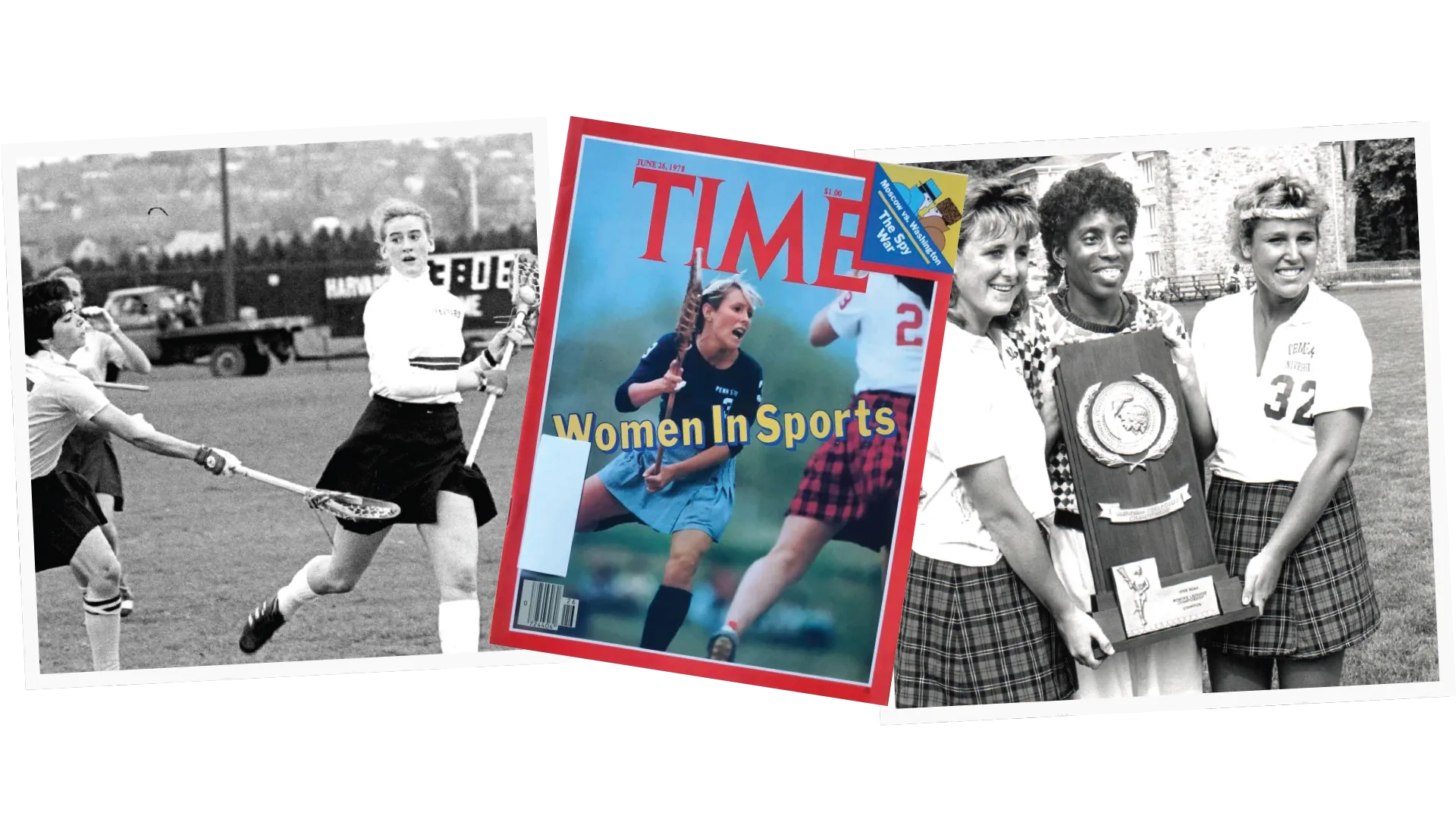
If governance built the framework, opportunity ignited the boom. The passage of Title IX in 1972 reshaped the landscape of women’s athletics, catalyzing explosive collegiate growth. Programs multiplied from just 31 teams in 1972 to more than 100 a decade later, dramatically expanding access and visibility.
The AIAW initially oversaw championships, but 1982 marked a watershed: the first NCAA women’s lacrosse championship, won by UMass over Trenton State (now TCNJ). That same year, the United States captured the inaugural IFWLA World Cup, cementing global dominance.
Dynasties emerged. Penn State secured three consecutive collegiate titles, while TCNJ began building its Division III empire. Coaches like Tina Sloan Green (Temple), Susan Scheetz (Penn State) and Sue Stahl (U.S. National Team) shaped collegiate and international excellence.
Equipment slowly evolved — plastic sticks in 1979, optional padded gloves in 1983 — but the spirit of the game remained rooted in stick skills and spatial intelligence. By 1990, women’s lacrosse was no longer regionally concentrated. It had become a national collegiate sport with international stakes, fueled by equity legislation and institutional investment.
MILESTONES
1972 — Title IX is signed into law. Prohibiting gender discrimination based in federally funded educational institutions, the landmark legislation is interpreted to require athletic opportunities for women and men that are proportionate to a college’s enrollment.
1972 — The International Federation of Women’s Lacrosse Associations (IFWLA) is founded. The first formal meeting is held in London, with seven countries attending.
1975 — The legendary U.S. Women’s Touring Team defeats England for the first time in history.
1982 — UMass beats Trenton State in the first-ever NCAA women’s lacrosse championship.
1982 — The first IFWLA World Cup is played in Nottinghampshire, England. The United States defeats Australia in overtime. Four years later, the Aussies would exact revenge on U.S. soil. An international rivalry is born.
1987 — Larger goalie sticks are introduced in the women's game.
1990 — Led by coach Carole Kleinfelder, Harvard becomes the ninth different team to win the NCAA championship. The Crimson go undefeated (15-0) and beat Maryland in the final.
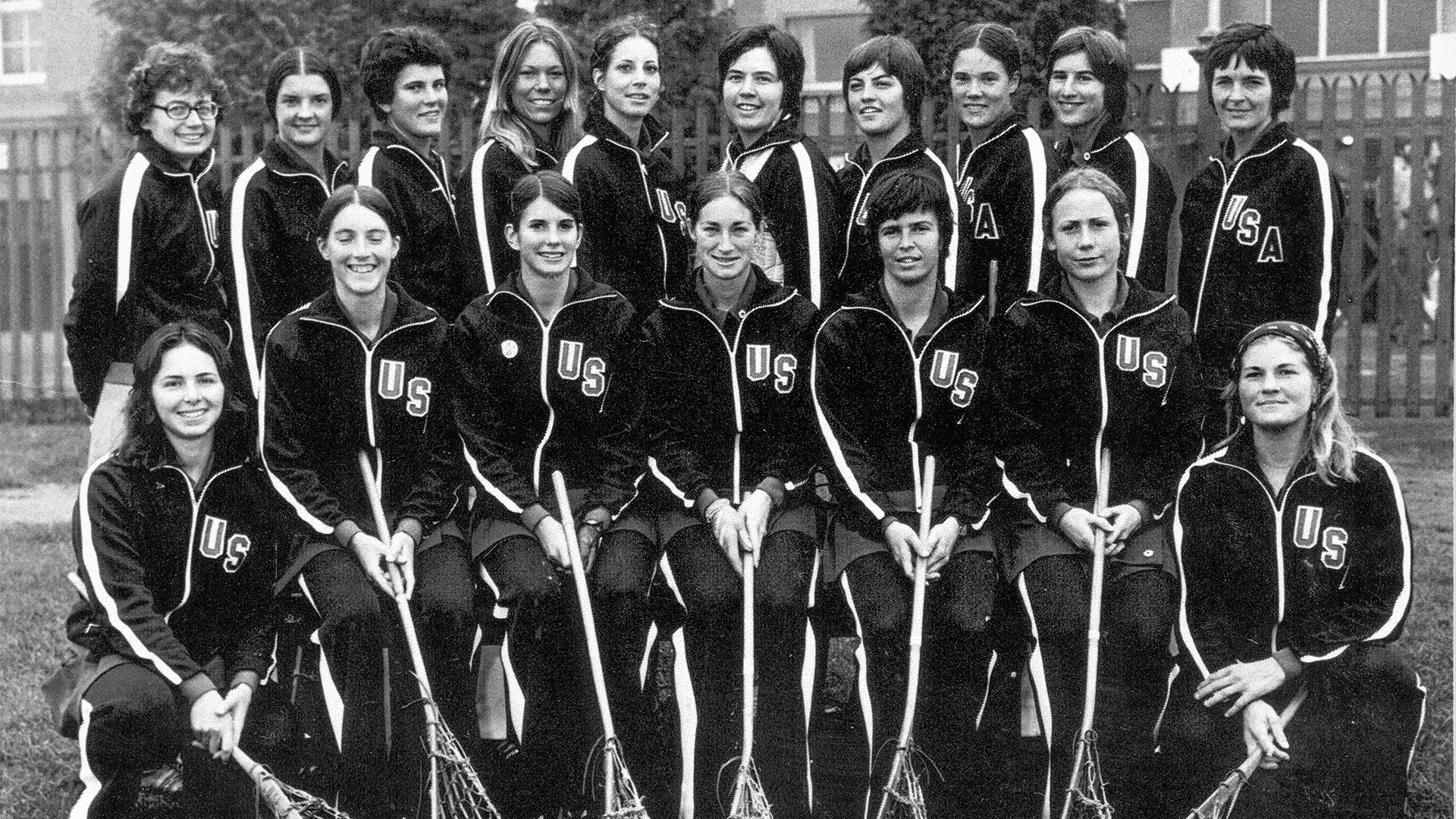
ICONS OF THE ERA
Jane Barbieri — 1975 U.S. Touring Team, captain of inaugural World Cup team
Feffie Barnhill — Trailblazing coach and transformative leader in the game
Karen Emas Borbee — Record-setting scorer and decorated champion at Delaware
Francesca DenHartog — Harvard’s all-time leading scorer, 3x gold medalist with USA
Betsy W. Dougherty — Penn State star played for U.S. in four world championships
Heather Dow — Goalie of the century also sustained a long coaching career
Kathleen Geiger — Temple All-American, U.S. team captain, enduring champion
Tina Sloan Green — Trailblazing Temple coach, advocate for Black women in sport
Amanda Moore O'Leary — Dominant midfielder and national champ at Temple
Candace Finn Rocha — 2x national champ and 4x All-American at Penn State
Julie Williams — 2x All-American defender and World Cup champion
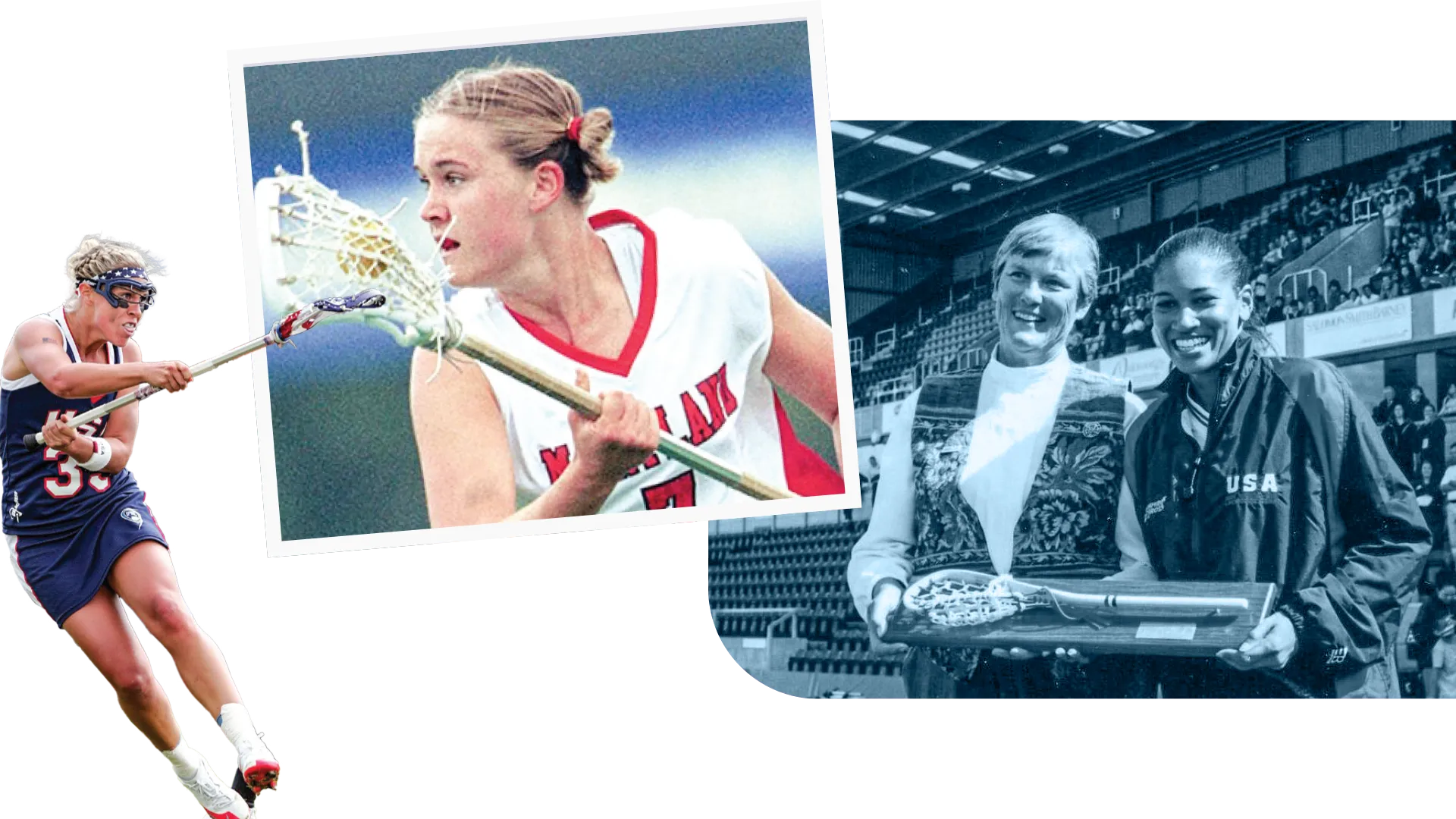
DYNASTIES AND MODERNIZATION
1991-2009
The modern era accelerated through innovation and powerhouse programs. Equipment and rules advancements — larger goalie heads, mandatory mouthguards in 1993, offset stick heads and on-the-fly substitutions in 2000 and mandated eyewear in 2004 — subtly but decisively increased tempo and athleticism.
On the field, dynasties defined the narrative. At Maryland, coach Cindy Timchal built a juggernaut, winning eight NCAA championships in 10 seasons (including seven straight from 1995-2001) and setting a standard for sustained excellence.
Soon after, Northwestern rose to prominence under Timchal disciple Kelly Amonte Hiller, capturing seven titles in eight years and expanding the sport’s geographic footprint into the Midwest.
Internationally, the U.S.-Australia rivalry intensified, with dramatic World Cup clashes in 2001 (won by the U.S.), 2005 (won by Australia) and 2009 (reclaimed by the U.S).
In 2000, Lacrosse Magazine (now USA Lacrosse Magazine) honored the sport’s pioneers and stars by naming an All-Century Team, symbolizing a sport confident in its history yet racing forward. By 2009, women’s lacrosse was faster, stronger and nationally relevant.
MILESTONES
1993 — Mandatory mouth guards are introduced in the women’s game.
1995 — The first international junior-level (U19) world women’s lacrosse championship is held in Haverford, Pa. Australia defeats the U.S. 5-4 to win the Maggie Boyd Trophy.
1996 — TCNJ wins its sixth consecutive and ninth overall NCAA Division III championship, although the 1992 championship is later vacated due to player eligibility rules.
1998 — US Lacrosse (now USA Lacrosse) is founded as the unified governing body of lacrosse in the United States. It’s a massive merger of eight national, mostly volunteer-run lacrosse organizations, to consolidate resources and leadership in the sport. The USWLA and women’s lacrosse officials are instrumental in establishing a vision for the organization. This sets the stage for a participation boom at the turn of the century.
1998 — Restraining lines and timeouts are added to the women’s game ruleset.
2000 — On-the-fly substitutions are allowed and new stick modifications lead to the development of offset heads.
2001 — Led by generational talent Jen Adams, Maryland wins its seventh straight national championship and eighth overall under Cindy Timchal. The Terps defeat Georgetown 13-12 in a triple-overtime thriller.
2005 — A record 6,820 fans attend the IFWLA World Cup final between Australia and the U.S. at the Naval Academy in Annapolis, Md. Adams leads Australia to an upset victory, ending a string of four straight world titles for the Americans.
2005 — Northwestern defeats Virginia in the NCAA Division I championship, cementing a perfect season (21-0) and becoming the first non-East Coast team to claim the national title.
2008 — The Federation of International Lacrosse (now World Lacrosse) is established, unifying the men’s International Lacrosse Federation (founded 1974) and the IFWLA (founded 1972). Women’s game pioneer Feffie Barnhill is FIL president.
2009 — Northwestern wins its fifth straight NCAA title and goes on to claim seven of eight national titles from 2005-2012.
2009 — The U.S. Women’s National Team reclaims the world championship with an 8-7 win over Australia in Prague, Czech Republic. They’ve not lost a game since.
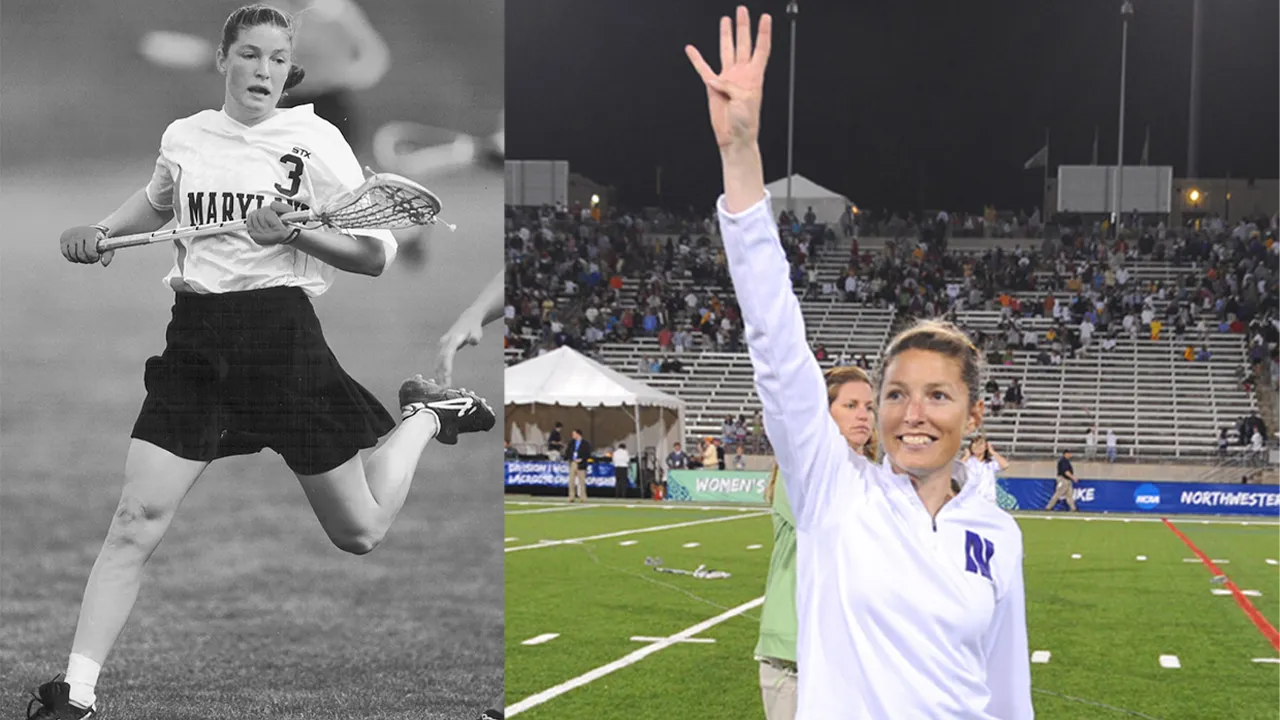
ICONS OF THE ERA
Jen Adams — The GOAT of women’s lacrosse; 4x All-American and first Tewaaraton winner
Cherie Greer Brown — Dominant defender, 4x U.S. team member and 2x world champ MVP
Danielle Gallagher — 4x U.S. team attacker amassed 64 career points in world championship play
Kelly Amonte Hiller — 2x national player of the year at Maryland built Northwestern dynasty from scratch
Kristen Kjellman Marshall — First Northwestern great won two Tewaaraton Awards and a world title
Hannah Nielsen — Aussie sensation also won a pair of Tewaaratons at Northwestern
Chris Sailer — 3x NCAA champion coach at Princeton, one of the most respected figures in game
Cindy Timchal — 8x NCAA champ at Maryland just keeps winning at Navy; set to surpass 600 wins
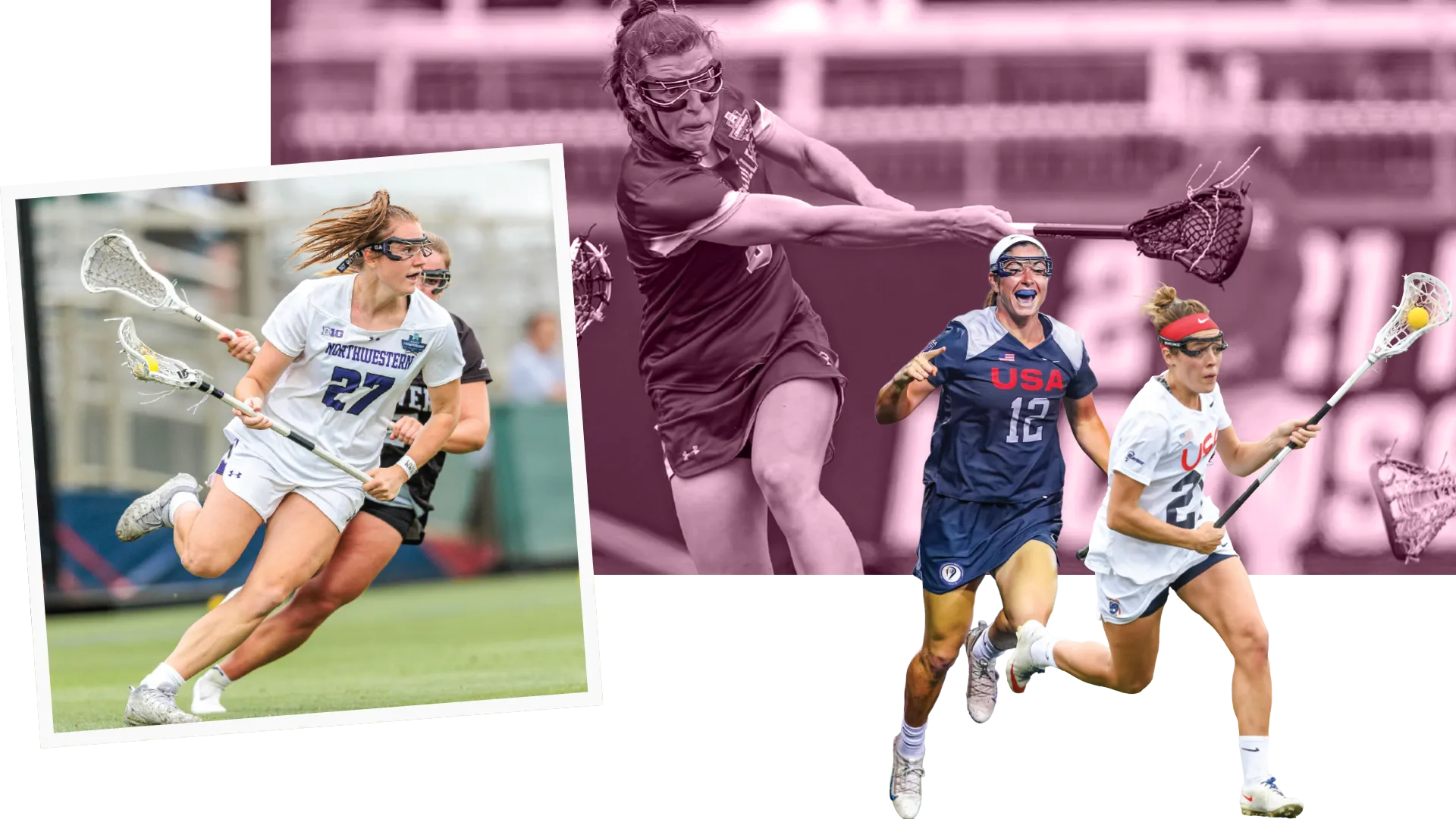
SPEED, SAFETY AND SPECTACLE
2010-PRESENT
The 2010s ushered in an era defined by pace and protection. Rule changes aimed at clarity and speed reshaped strategy. In 2012, yellow cards created true player-down situations, increasing accountability and tactical nuance. Draw participants were limited to three per side, streamlining restarts and spotlighting specialist skill.
Defenders were permitted in the crease in 2014, altering defensive schemes and goalie dynamics. Meanwhile, safety standards advanced. ASTM International published a women’s headgear performance standard in 2016.
The most transformative change arrived in 2016 with the NCAA’s adoption of a 90-second possession clock. The clock compressed decision-making, rewarded transition play and made games more TV-friendly. Combined with hard boundaries and NCAA-specific rules introduced in the previous decade, the sport became more structured for a modern audience.
Northwestern’s dynasty gave way to Maryland’s resurgence under Timchal successor Cathy Reese — as well as a coming of age for ACC powers North Carolina (coached by Jenny Levy) and Boston College (Acacia Walker-Weinstein).
From 2010-2025, Maryland, Northwestern, North Carolina and Boston College combined to win 15 of 16 national championships, the lone outlier being James Madison in 2018.
The 2025 NCAA Division I championship drew a record crowd of 14,423 at Gillette Stadium in Foxborough, Mass. Broadcast partnerships with ESPN and the Big Ten Network have made the women’s game more accessible than ever.
Parallel to college expansion, professional opportunities have matured. From the UWLX to the WPLL, Athletes Unlimited and now the PLL-owned Women’s Lacrosse League, there has been some form of pro women’s lacrosse for most of the last decade.
Coming in 2028, a watershed moment. Using the sixes format, women’s lacrosse will be played in the Olympics for the first time in history at the LA28 Summer Games.
The founding mothers would be proud.
MILESTONES
2016 — The NCAA approves a 90-second possession clock for collegiate play starting with the 2017 season, officially ending the era of stall ball.
2016 — The first professional women’s lacrosse league is founded. The United Women’s Lacrosse League (UWLX) carries the mantle for two seasons, followed by the Women’s Professional Lacrosse League (WPLL) and, after the pandemic, Athletes Unlimited Lacrosse.
2017 — A tectonic shift in the recruiting landscape. Led by the IWLCA (and endorsed for the men’s game by the IMLCA), the NCAA enacts a rule prohibiting contact with high school players before Sept. 1 of their junior year — thus curbing a practice that previously led to athletes committing to colleges as early as eighth grade.
2017 — The International World Games Association adds women’s lacrosse to the program for The World Games 2017 in Poland, a major milestone on the path to Olympic inclusion.
2024 — The Premier Lacrosse League launches the Women’s Lacrosse League, leveraging partnerships with ESPN and Maybelline to elevate the pro women’s product to new heights. The WLL debuts with a condensed sixes season in 2025 and an 11-week, full-field 10v10 regular season and playoffs in 2026.
2028 — Lacrosse returns to the Olympics and the women’s game makes its Summer Games debut in Los Angeles.
ICONS OF THE ERA
Taylor Cummings — 3x Tewaaraton, Maryland legend, pro trailblazer
Jenny Levy — Built UNC dynasty, 2022 world champion coach
Charlotte North — Electrifying talent, record-setting scoring and social savvy
Cathy Reese — Restored Maryland dynasty with five NCAA championships
Izzy Scane — Unstoppable offensive force aka Scane Train surpassed North
Kayla Treanor — Syracuse icon, all-time USA scoring leader and YouTube idol
Devon Wills — 3x world champ goalie set standard for U.S. National Team
Correction: A previous version of this article incorrectly identified 1993 as the year larger goalie sticks were introduced in the women's game. The correct year is 1987. We regret the error.