
OWINGS MILLS, Md. — With the college season in the books, lacrosse fans now turn their eyes full-time to the Premier Lacrosse League’s 2026 campaign. A hallmark of the PLL is that the talent is the best in the world, and earning a roster spot at the pro level is remarkably difficult.
It is hyper competitive, as even college All-Americans might not consistently play their way into being a gameday roster regular. The pathway to making it in the PLL is not only difficult because it’s competitive, but because it’s narrow. After a player’s college career ends, there aren’t many ways to be seen by PLL coaches and general managers, meaning that with every day that passes from the end of college, the path to the pros gets that much harder.
That is, until this year.
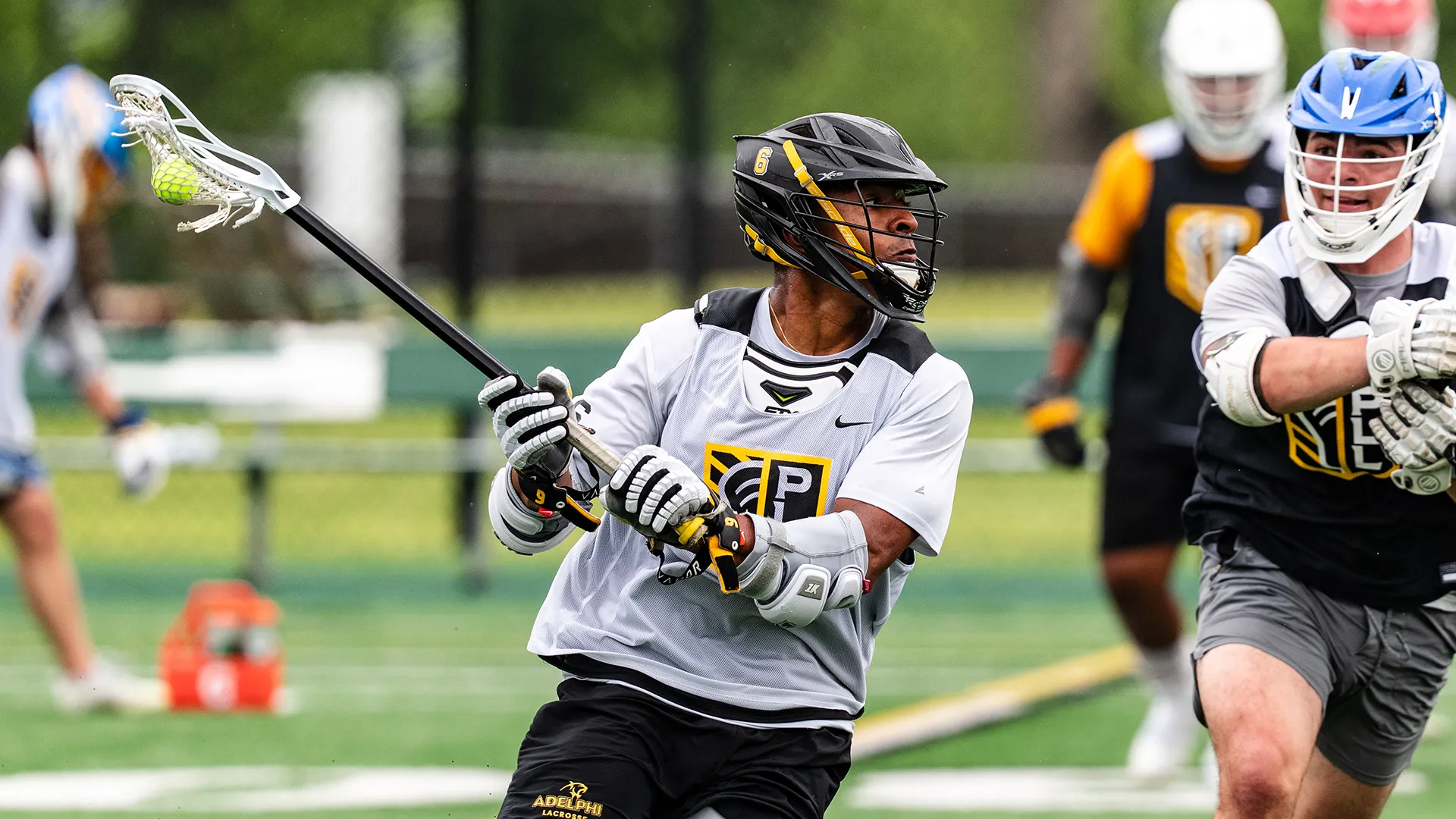
The league held its first-ever PLL Pro Day on May 27 at Stevenson University. The invite-only event brought roughly 40 players to compete in drills, live action situational play and ultimately a scrimmage.
Coaches and GMs from all eight teams were on hand to watch, coach, and evaluate.
“It’s great to see guys get an opportunity,” California Redwoods GM Joe Spallina said. “The draft is only four rounds, so I think the opportunity for guys to get more looks, especially with the evolutions of the NCAA rules in next year’s class, allows you to take a deeper look into the guys who may have been fifth- or sixth-round picks.”
Invitations for the event were sent in late April and early May, and invites were a rolling process. As players declined, pulled out due to injury, or couldn’t attend, additional invites were sent.
The PLL focused on keeping the number of attendees around 40-50 players at most. Because of the nature of the process, some players had to drop everything and get to Maryland for their chance to play.
“I ended up getting an invite yesterday, last night, and I drove through the night to get here,” Georgetown graduate Patrick Crogan said. “But very excited to have the opportunity. They put us through a lot, but I think they really tested us. This was great.”
Riley Hastings, an All-American at Lynchburg, was thrilled to be invited and thanked his coach Steve Koudelka for reaching out on his behalf.
“I think everyone here had the same dream as a 7-year-old kid,” Hastings said. “But I never really thought it was possible until this came across my desk. I’m so excited to be here.”
The day began at 9:30 a.m., but several players were at the field well before to warm up on their own, get taped by trainers and prepare. The first session included stick work and shooting drills for offensive players, while defensive players focused on footwork and individual skills.
After that, the weather intervened. Lightning in the area forced players into the locker room for 30 minutes.
That time wasn’t wasted. While indoors, players heard from Jim Stagnitta, Chris Bates, Steven Brooks, Jesse Bernhardt, Chris Collins and Spallina about the differences in play between the college and pro games. An emphasis was put on the fact that pro players are trusted to maintain their bodies, their fitness and their preparation on their own. There wouldn’t be anyone chasing them down to stay in shape.
On the field, the game moves at hyper speed. Drills were played using the PLL’s shorter shot clock so prospects could experience it. There was talk about just how good PLL short-stick defenders are and how difficult trying to run by the likes of Danny Logan or Beau Pederson really is. Brooks, along with Brendan Mundorf, explained just how physical the PLL game can be. From a physicality standpoint, it’s probably closer to indoor lacrosse than college lacrosse.
Coaches were honest about just how hard it is to stick in the pros, but also about how great of an opportunity they had in front of them.
More than one coach spoke about the new NCAA “5 in 5” rule that could seriously impact the 2027 PLL Draft. Should many of next year’s seniors suddenly have an extra year of college eligibility, the draft class would not be nearly as deep as was originally thought. With that in mind, players on the field at Pro Day had the chance to make an impression — if not for the immediate future, then for 2027.
“This gives you the chance to stash a guy,” Spallina said. “You have a guy and maybe you know you have a guy ahead of him for whatever reason. Maybe there’s a guy here who needs a little more development, you have a guy on your roster who is nearing retirement, all those things are there. There’s certainly some players that turned some heads today, and I couldn’t be happier for these guys.”
After the weather delay, players competed in small-sided situations, building from 2-v-2 to 4-v-4, and eventually into settled half-field 6-v-6. There was also a structured game session, with coaches putting specific times on the clock and pushing for specific in-game scenarios.
“There’s definitely some good talent,” Carolina Chaos GM Spencer Ford said. “In terms of seeing different guys run up and down the field, being able to add to our roster, as we start to become whole to figure out what needs we might have, there’s some guys that have really shown out.”
The last session was a full-fledged PLL game, complete with referees and league rules. U.S. Men’s National Team head coach and PLL Head of Competition Seth Tierney urged players to leave it all on the field for their final game of the day.
Players were also reminded that the PLL game is going to feel different. Shot clocks are different, pace is different. There were a few moments when the short shot clock clearly took players by surprise. Some shots that might be fine in college but shouldn’t be taken at the pro level were let go, and the up and down started to catch up with those who maybe hadn’t played as much in recent weeks.
But by and large, the game was well played and competitive. The challenge for PLL GMs is that, while they might have seen talent on the field they consider worth putting on the roster, they also need to ask themselves whose roster spots these prospects could take.
This was just year one of PLL Pro Day. It won’t be a one-time thing. There are ways this can become even more impactful in the future.
"I think we can do it in different places as well,” Ford said. “What this teaches us today is that there’s plenty of guys out there who want to get a chance at pro lacrosse. I think if we can do this in some different markets, maybe markets where we’re looking to stay full-time, it’d be really, really good.”
PRO DAY STANDOUTS
Kyle Lewis, M, Adelphi and Jack Taylor, A/M, Jacksonville — Both had very strong days. Lewis looked like the best player on the field. Both players are already on PLL rosters (Lewis on the Philadelphia Waterdogs and Taylor on the Denver Outlaws), but players drafted in the last two rounds could be placed on the Evaluation List and allowed to play on Pro Day so the club that drafted them could get another look. Lewis and Taylor both played well enough to show they belong on PLL rosters, and given their draft status, it wasn’t necessarily a surprise to see that.
Patrick Crogan, A/M, Georgetown — Speed and quickness tend to pop most at showcase-type events, and Grogan has plenty of both. He spent time at both attack and midfield. His best play came in the first session when he used an explosive first step to dust his defender and fired off a shot that stung the top-right corner before the slide could even begin to move. The sudden strike turned heads on the sideline.
Liam Quinn, D, Saint Joseph’s — It’s hard to miss Liam Quinn on the field. At 6-7, he is literally head and shoulders above everyone else. Quinn showed off excellent footwork for a player his size, using his length and strides to play angles well. He’s aggressive on ball with the stick and was physical and effective in ground ball scrums.
Connor Winters, G, Binghamton — Winters is a big body at 6-3, 225. He fills the net and plays angles extremely well. As clean saves into outlets become a greater focus at the pro level, goalie evaluation is changing a bit to look for netminders who not only stop the ball but start the offense. Winters was outstanding in this area. His clean save rate was high, and his outlet passes were sharp, consistently finding the right player to push tempo.
Riley Hastings, A/M, Lynchburg — One of only a couple Division III players at the event, Hastings made impressions early. In the small-sided drills, he showed off pro-level ability both as an off-ball player and as a dodger. He was able to run by his defender and get his own shot in game situations, but he was effective dodging to feed as well.
John Alie, A, Bellarmine — Alie finished his career at Bellarmine as the program’s all-time goals leader. His play at Pro Day showed why. Alie scored every which way around the goal. He scored BTBs, from sharp angles, and while using fakes to move the goalie. He had the full bag of tricks on display. He also threw a couple nice assists, showing he’s more than just a finisher.
Aidan O’Neil, A, Richmond — A name that some thought would be called on draft day, O’Neil really shined in game situations. In the first of the game sessions, O’Neil scored the first goal just 11 seconds in off a fastbreak chance. In the second game session, he scored two goals back-to-back, both beating his man off the dodge from X and getting above GLE, one to his right and one to his left. He showed off two handedness, moving to both sides of the field at attack, and versatility. After his second goal in game two, a teammate yelled, “Someone sign him!” from the sideline.
Keagan Treacy, SSDM, Army — Treacy is a physical specimen. He’s taller than typical PLL SSDMs, standing 6-5. Treacy’s physicality and athleticism stand out. He’s still able to get low and play on dodgers’ hips, showed off strong footwork, and did the fundamentally sound things you would want your shorty to do at a pro level. He also ran the field well, pushing tempo and staying involved on the offensive side of things to look for ways to win in the sub game.
Finn Thomson, A, Syracuse — Like O’Neil, Thomson was a player that some expected to be drafted. Thomson’s skills are known. He’s got exceptional hands, is tremendous off ball, and is a creative and effective goal scorer. Thomson showed plenty of that but also played very well with the ball in his stick, showing off a wrinkle that wasn’t as big a part of his game at Syracuse.