On Jan. 31, Tufts University shared the executive summary of an independent investigation focused on offseason workouts conducted by a Tufts alum and recent graduate of the BUD/S Navy SEAL training program that resulted in several men's lacrosse players being diagnosed with rhabdomyolysis.
BACKGROUND
Tufts held a voluntary, approximate 75-minute team workout on Sept. 16 led by a Tufts graduate with Navy SEAL training. As a result of the intense workout, several players were diagnosed with Rhabdomyolysis (or rhabdo), a rare and potentially lethal medical condition that can occur after excessive exercise without rest.
Rhabdo occurs because of a breakdown in muscle tissue that releases a damaging protein into the bloodstream. It can lead to kidney failure, among other life-threatening consequences.
Tufts announced Sept. 25 in an email to the university that all nine men’s lacrosse players hospitalized had been discharged.
Tufts hired external, independent investigators — D. Rod Walters II, a nationally recognized expert in the care and prevention of student-athlete injuries, and Randy Aliment of the law firm Lewis Brisbois — to review what led to the players’ diagnosis.
FINDINGS
During the three-month interview process, Walters and Aliment were tasked with determining "exactly what happened before, during, and after the workout; assessing the university's response; assessing [Tufts'] conditioning and training protocols; and reviewing our procedures and policies ..."
The investigation included 68 interviews with students, parents and Tufts employees.
Here are the key findings, per the investigation:
- The Tufts Director of Sport Performance approved the workout plan the day he received it; he did not share the workout plan with others in the athletic department.
- The Tufts graduate who led the workout declined to be interviewed.
- The Navy SEAL workout primarily focused on upper extremity muscle groups.
- By some accounts, student-athletes performed about 250 burpees and other exercises during the approximate 75-minute workout.
- By the next morning, some student-athletes began experiencing adverse effects and reported to the team athletic trainer; two days later, several rhabdo cases were identified.
- "The third party who led the workout did not have any credentials that qualified him to design, lead or supervise group exercise, to the knowledge of the investigators."
- All exercises within the workout were considered inappropriate for the men's lacrosse team in terms of principles of transition, conditioning and acclimatization; the Navy SEAL workout was "not exercise science-based, physiologically sport-specific or tailored to the individual sport lacrosse."
- Based on the timeline of events, investigators concluded these cases of Rhabdomyolysis developed slowly and then escalated quickly.
- Parents who were interviewed were critical of Tufts' "failure to coordinate medical care for student-athletes."
- Two students who were not team members participated in the workout; one student was medically cleared to do the workout, while the other was not and should not have been allowed to participate.
- Tufts doctors implemented a "return to play plan" based on protocols from the University of Iowa.
RECOMMENDATIONS
Here are a few of the key recommendations, per the investigation:
- Ensure that anyone leading a workout is properly qualified and complies with Massachusetts, NESCAC or NCAA policies and regulations.
- No student should be permitted to participate in athletic activities until all pre-approvals are met and confirmed by the compliance office.
- Annual continuing education for coaches and strength coaches as it pertains to student-athletes with asthma, Sickle cell traits, allergies, etc.
ABOUT TUFTS
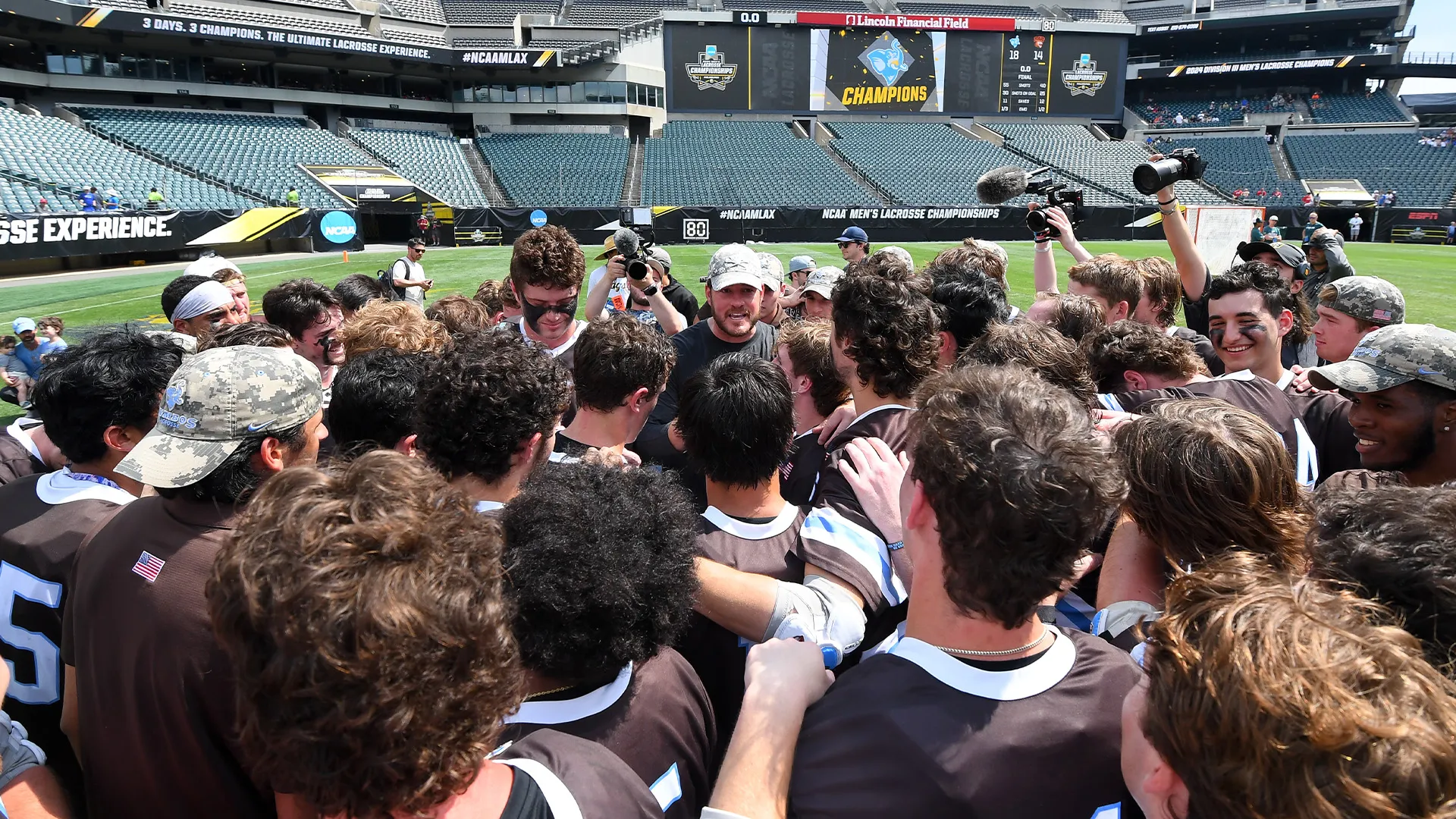
Tufts was the 2024 NCAA Division III men's lacrosse champion after an 18-14 win over RIT. The Jumbos, ranked No. 1 in the USA Lacrosse Preseason Top 20, will open their season March 1 on the road against Connecticut College.