
Reese Walker was 13 years old when she went to see her doctor for a sinus infection. While there, her mother, Kim, asked about pain her daughter was feeling in her leg. They had assumed it was just growing pains.
The doctor asked if the pain was in both legs or just one. The pain was in one. Walker got an MRI, and then the Fayetteville, N.C., native was sent to Duke University Hospital.
Within three weeks, Walker received her diagnosis: Stage IV Ewing Sarcoma, a rare bone cancer. She didn’t know what to expect or what exactly having cancer meant. She did, however, have one big question on her mind.
“When can I play lacrosse again?” she asked the doctor.
The tumor Walker had was inoperable. It was wrapped around her nerves, and doctors weren’t sure she could overcome it. She was given a 15-percent chance of survival. If she recovered, they believed she wouldn’t play sports again.
The diagnosis was so dire that Walker was even granted a wish through the Make-a-Wish foundation, a non-profit organization that grants wishes for terminally ill children.
Walker went through 14 rounds of chemotherapy and six rounds of radiation. For 12 of the 14 chemotherapy treatments, Walker was back in the hospital the next week with a fever, which was “life or death” for a cancer patient. She lost her hair.
One of the tougher parts for the multi-sport athlete was how exhausted she consistently felt. She went from playing basketball and lacrosse in the front yard “to being out of breath walking up two stairs or being out of breath walking to the toilet at night.”
Walker held tightly onto lacrosse through her treatment. When she was home, she had her stick and cradled around the house. She tried to be on the sidelines for her club team’s games.
“Lacrosse saved my life in a way,” Walker said. “It gave me hope I really needed in the hospital. It gave me something to look forward to and get back to. It was like I was more than a diagnoses,” she added.
Walker received even more inspiration from the lacrosse world thanks to the Duke women’s lacrosse team.
In February 2010, prior to connecting with Walker, the Duke women’s lacrosse team was paired with 7-year-old Meg Wasley — a young lacrosse player from Holly Springs, N.C. — who was diagnosed with an inoperable malignant brain tumor.
When Walker was at Duke Children’s Hospital, someone who worked there remembered the relationship the team built with Wasley and reached out to head coach Kerstin Kimel.
Blue Devils players visited Walker in the hospital, and the program invited Walker and her family to practices.
Connecting with children like Walker was something important Kimel wanted her players to experience and provide much-need perspective.
“It’s super easy for college kids to get self-absorbed in their every day, their academics, their lacrosse,” Kimel said. “With these children and these families, it reminds you what you think is hard — balancing your life in college with academic and athletic demands. It really pales in comparison to what these kids are going through.”
Kimel herself is a cancer survivor. She was diagnosed with breast cancer in 2015, and over the years, she’s provided advice and mentorship to other college coaches that have been diagnosed with cancer.
She could understand how “excruciating” things were for the Walker family, and she knew her team could help. She said families of cancer patients need support and distractions, and Walker confirmed that’s what the team was able to do.
“Having a part of the game in the hospital, it almost makes you forget you’re sick for a minute,” she said. “Those relationships, when you can forget you’re sick for a minute, and they gave me hope and something to get back to, it was amazing all around. Coach Kimel still keeps up with me and has kept up with me since I was diagnosed, and that meant a lot, too.”
After six rounds of chemotherapy, Walker got a body scan. The results showed spots in three parts of her body, suggesting the treatment wasn’t working. Walker got in the car to go home and told her mom she didn’t think the spots were cancer.
The next time she went back for another scan, all three spots were gone. The doctors were flummoxed. Walker was excited, but with Ewing Sarcoma, there was a high probability it would come back within five years.
Walker’s parents talked with a Ewing Sarcoma specialist. He told them that playing contact sports was not only unlikely, but because of the intensity of the radiation, he thought it was likely she was going to have to have a rod put through her back. He suggested to them that Walker take up swimming. Her parents laughed at the notion.
The thought of giving up lacrosse never crossed Walker’s mind. She knew she would get back to the game.
“I didn’t really have a high probability of surviving, either, but I did that,” Walker said.
“
I didn’t really have a high probability of surviving, either, but I did that.
The hardest part about playing again wasn’t the fear of getting hit. It was the stamina. Walker said putting her stick skills to use was “kind of like riding a bike,” and she was just so happy to be back with her friends at school and on the field.
Right when she returned her freshman year of high school, the COVID-19 pandemic hit, and Walker had to wait to play lacrosse yet again. While it was a momentary setback, it wasn’t going to permanently disrupt her path.
“It was just another obstacle that I’m going to get through and persevere through, and I did,” Walker said.
One of Walker’s club coaches reached out to Meredith head coach Lauren Scott. The Avenging Angels coach went to a game and was impressed with Walker and how she dominated the competition.
Meredith was the perfect fit for Walker. She respected the competitive nature of the USA South conference and appreciated how the Avenging Angels “dominate their conference.” She liked that the school was close to home. When she visited the school and met the players, she said they felt like family.
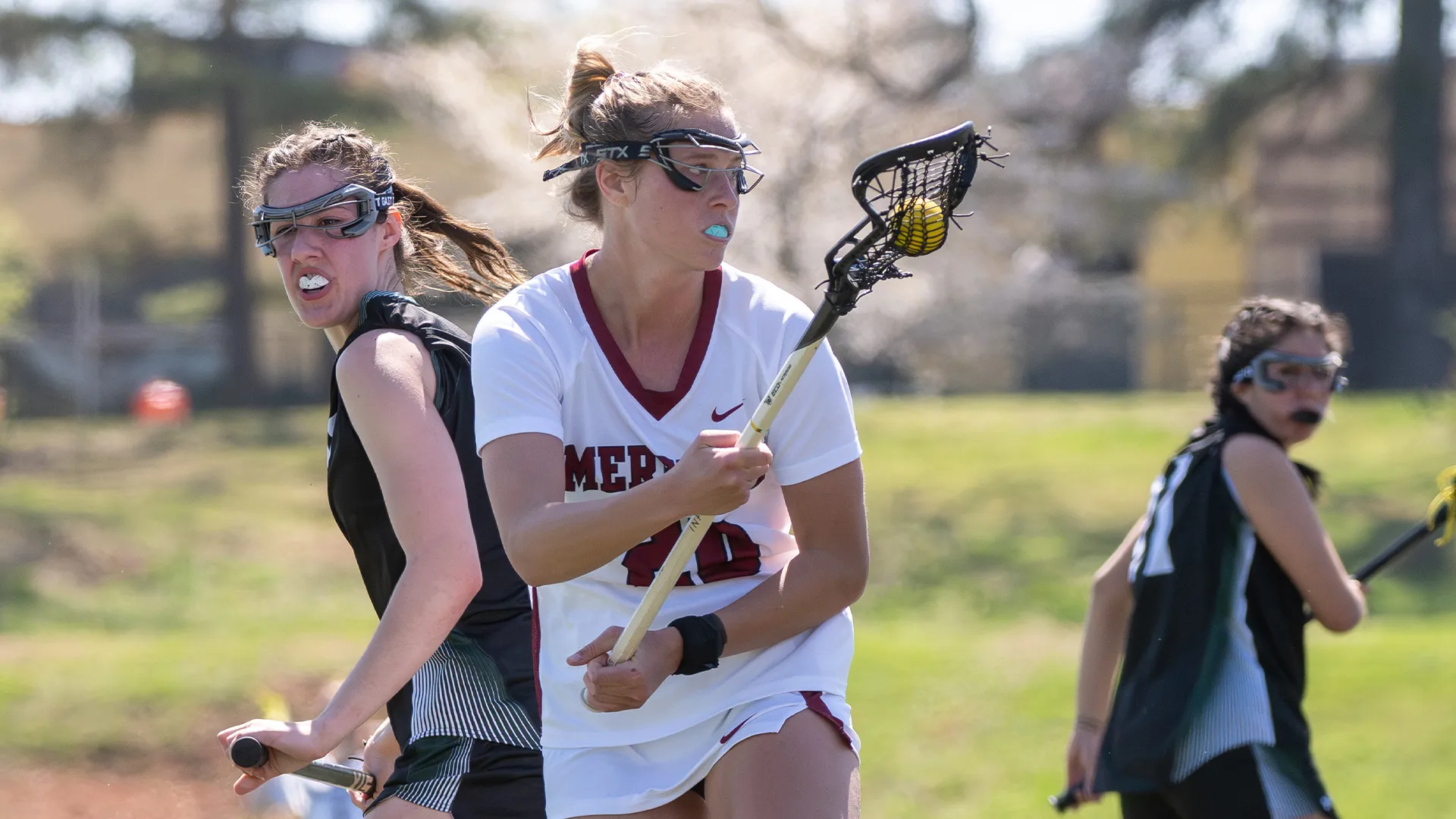
Since arriving on campus, Walker has ripped through the record books. She’s the conference’s all-time leader in assists and points. In 73 games through three-plus seasons, Walker has scored 223 goals and added another 241 assists.
She’s won the conference’s Rookie of the Year, Offensive Player of the Year, and Tournament MVP. In 2025, she was named the Meredith Athlete of the Year and was an Honorable Mention All-American.
She means more to the program than her accolades.
“It’s who she is and the way she approaches the game that gains the most respect,” Scott said. “She takes nothing for granted. She realizes every day, every game, every moment with her team is a blessing. That’s perspective. We always talk about how we’re Division III athletes and there’s so much more that’s bigger than the game. Reese is really not just someone that can get behind that saying, but she is the why.”
“Obviously every athlete doesn’t want to show up every single day and give 100 percent and show up to the conditioning and the lifts and the meetings and all of that,” Walker said. “Having that experience [fighting cancer], on the days I don’t want to show up and give 100 percent, I do it for the 13-year-old who would do anything to get back on the field.”
Being a cancer survivor doesn’t define who Walker is, but it does influence her. Not only does it drive her on the lacrosse field. Walker is majoring in child development and wants to use her insight to work in a hospital doing occupational therapy for children.
She also remembered how Kimel and the Duke lacrosse team helped her through her darkest times, and she wants to do the same for others.
On Wednesday, March 25, Meredith hosted North Carolina Wesleyan in a Childhood Cancer Awareness Game. Walker was on social media and saw the story of Carter McArthur, a young boy also fighting against Ewing Sarcoma. Walker reached out to McArthur’s mom and asked what she could do to help.
To Walker, the game dedicated to supporting McArthur was the most meaningful thing she’s done in a Meredith lacrosse jersey.
“The fact that I get to help a kid and give him hope, it’s just one of the biggest rewards,” Walker said. “I was at the game, and I was thinking, ‘I’m so glad I survived so I can do this for a kid that’s fighting the same fight I did.’”