There’s snow on the ground throughout much of the U.S. — and possibly more on the way — but women’s lacrosse season has arrived.
The 2025 season ended with North Carolina sealing an undefeated season and seeing Chloe Humphrey earn the Tewaaraton Award, a first for a freshman.
No one is expecting the Tar Heels to take their foot off the gas, but there are many unanswered questions and storylines to watch play out this spring. After all, titles and Tewaaratons aren’t won on website pages in February.
Here’s what to put on your radar as the first draw approaches.
Is North Carolina Untouchable?
North Carolina isn’t the only team hitting the field this year, though the excitement around the team can make it seem that way. The buzz is unlikely to die down over the next three seasons, if we’re being frank.
Humphrey broke the program’s single-season record for goals (90) — and she is just getting started. She has a cast of budding stars around her with the same eligibility left, including Eliza Osburn (35G, 56DC), Kate Levy (14G, 24DC, 26CT) and Addison Pattillo (31G). Nevermind the returns of netminder Betty Nelson, defenders Brooklyn Walker-Welch and Sam Forrest and attacker Caroline Godine.
Carolina is on dynasty watch.
Northwestern's Transfer Haul Takes the Field
On paper, no one struck gold more times in the portal than Northwestern. The Wildcats reeled in goalie Jenika Cuocco (Drexel), attacker/draw queen Maddie Epke (James Madison), attacker Olivia Adamson (Syracuse) and defender/midfielder Annabel Child (Harvard). The four transfers provide reinforcements for Madison Taylor, who netted an NCAA-record 109 goals last year.
The boost isn’t excessive but necessary. The Wildcats, fresh off a runner-up finish in the NCAA tournament, graduated Niki Miles (42G, 27A) and Riley Campbell (37G, 17A), defenders Jane Hansen (49CT, 43GB) and Sammy White (39 CT, 51GB, 59DC) and goalie Delaney Sweitzer (9.07 GAA, .488 SV%).
Talent on paper still needs to play out on the field, but few people are better primed to mix stars than Kelly Amonte Hiller, who has done it with the U.S. Women’s National U19 Team and engineered a dynasty in the aughts.
Transfer Talk
Northwestern’s transfer haul dazzled, but don’t let it overshadow other prospective transfers’ shine. Boston College assistant coach Sam Apuzzo constantly refreshed the transfer portal up until the last day. It paid off when Marissa White’s name popped up on the final day to enter. The one-time rival netted 49 goals and helped North Carolina to a championship last season. The Eagles also brought in Casey Colbert, who tallied 79 points, including 57 assists, last year at Stony Brook.
Mallory Hasselbeck, who departed BC saw her career muddled by injuries. Now healthy, she has a shot at the on-field success she imagined in high school as a member of Stanford.
Florida State’s inaugural roster will include nearly 20 transfers, and it’'ll be interesting to see who wins the goalie battle between Julia Ward (Maryland) and Catrina Tobin (UMass).
ACC Shakeups
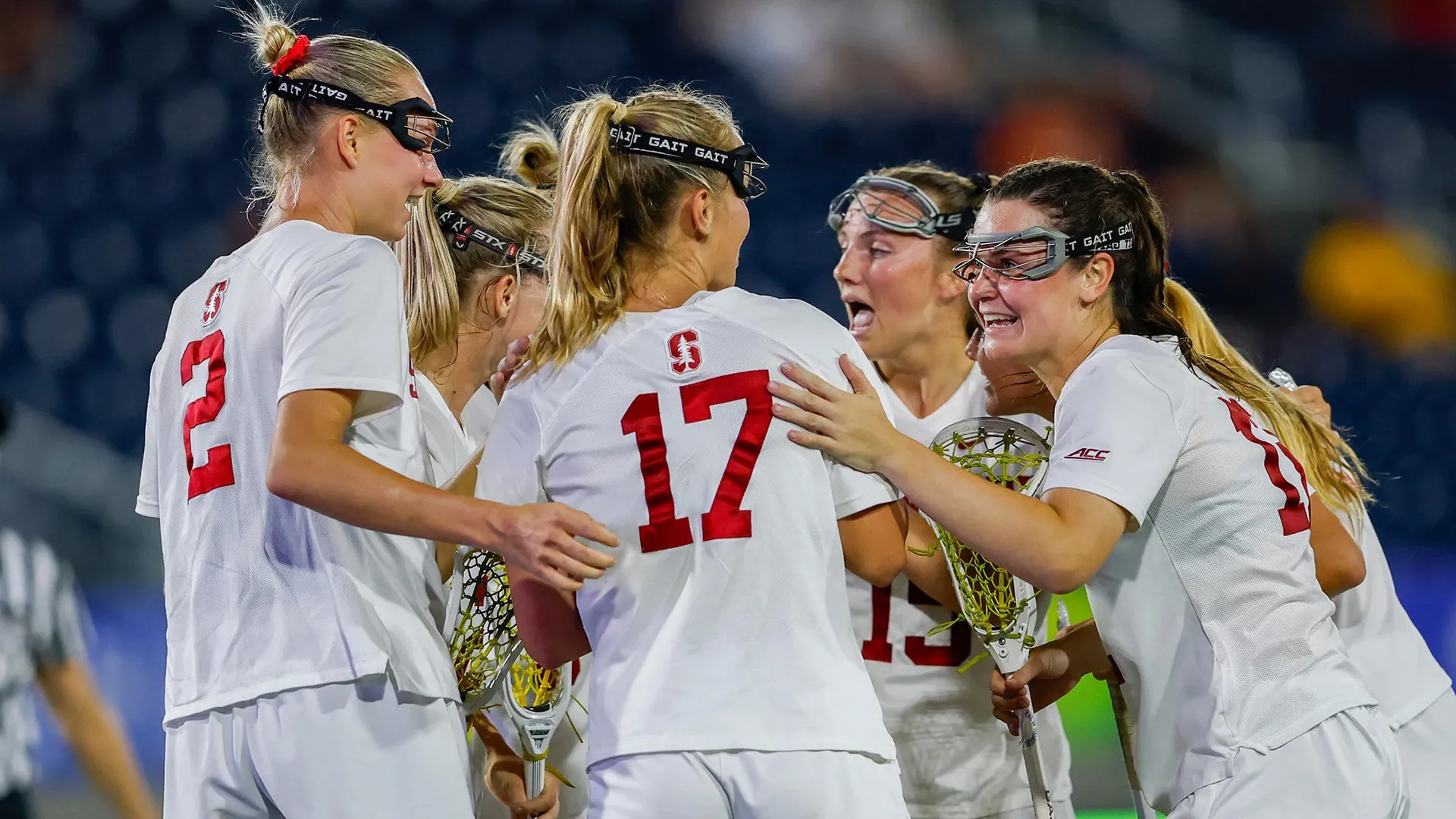
Stanford and Clemson advanced to the ACC semifinals, outlasting conference stalwarts like Duke, Virginia and Syracuse. How that success will hold as Syracuse enters the Regy Thorpe era, Notre Dame grows up, and Virginia settles into Sonia LaMonica’s tenure is something to keep an eye on.
The Cardinal return 95 percent of their scoring from last year, including Aliya Polisky, and “only” 94 percent of their assists, headlined by Elise Murphy and Martha Oakey. Draw specialist Annabel Frist returns from injury, and the aforementioned Hasselbeck enters the mix. When you compare that to much of the rest of the landscape, it bodes pretty well for Stanford.
Clemson is different. The Tigers lose significant scoring but will debut a talented freshman class that, unlike previous rosters, enters campus with full eligibility. Alexa Spallina, the nation’s top rookie out of Mount Sinai, N.Y., is poised to quarterback the offense. She’s familiar with one likely target, Aubrie Eisfeld. The two played club ball together on Long Island. Maryland’s all-time points leader, Emma Penczek, also enters the fold and probably the starting lineup.
It will be hard to contend with North Carolina, but it’s unlikely either of these newer-to-the-ACC programs will go quietly. And the rest of the league’s blue chips should feel unsettled.
Out With the Old, in With the … Older?
The Ivy League was crowded last season, with Harvard and Cornell narrowly missing the conference tournament. Brown made it. Yale repeated, beating regular-season champion Princeton in the final. But the Bulldogs graduated nearly all of their key players from last year, and to a lesser extent, so did Penn.
Princeton brings back nearly everyone but leading scorer McKenzie Blake — a significant loss, but one softened by the returns of Jami MacDonald (58G, 34A) and Haven Dora (29G, 60A). Princeton could be poised to reclaim the Ivy League tournament crown that’s eluded it since 2022.
Rule Changes
New rule changes will take effect this season. Among them:
- Draws will only occur at the start of the game, in the second half, and in applicable overtime sessions, plus after goals. Whichever team had possession at the end of the first and third quarters will begin the second and fourth quarters with the ball.
- Expanding one-minute releasable penalties in the midfield to all over the field, except in the critical scoring area.
- Using an advantage signal for one-minute releasable penalties, when applicable, which will allow teams the opportunity to play on. The one-minute penalty can be negated if a goal is scored during the advantage or administered at the conclusion of the advantage period.
- Running the clock on 8-meter free positions, except for the last minute of each quarter or overtime.
- Setting up 8-meter free positions only at the two adjacent hashes on both sides of the center hash.
- Upgrading dangerous contact penalties to a non-releasable yellow card.
- Flagging shooting space fouls in the critical scoring area.
The goal is to improve safety and the pace of play. How it unfolds, including adjustments on defense to avoid fouls, is likely to be an ongoing discussion, especially as players, coaches, officials and fans get used to the new rules.
A New Era in the Patriot League?
Loyola has a 93-0 regular-season record in the Patriot League since joining in 2014, winning the regular-season title each year. Only one team, Navy, has beaten the Greyhounds, three times in the tournament title game. One of those was last year, and Navy is No. 1 in the Patriot League’s preseason poll this year.
Now, it’s a tried and trite strategy to write in last year’s winner as this year’s favorite. “The champs are the champs,” right? But here, it’s an informed choice. Loyola’s graduation losses include top goalie Lauren Spence, top attacker Georgia Latch and top-at-everything Chase Boyle. Boyle’s stat line from last year alone was 77 goals, 25 ground balls, 19 caused turnovers and 210 draw controls. Those shoes are too big for one person to fill.
Meanwhile, the Mids welcome back Alyssa Chung, a rising star of a sophomore who tallied 66 goals and 15 assists. Mikayla Williams (51G, 14A) and Emma Kennedy (43G, 11A) bolster the multi-threat offense, and Felicia Giglio (10.22GAA, .412SV%) returns to the net. Like other programs, Navy isn’t unscathed by graduation. The Mids will miss Emily Messinese (43G, 26A) and Alyssa Daley (236DC), but the losses are less significant than the upheaval that happened further north.
Penn State’s New Direction
Kayla Treanor's move to Penn State turned heads. And Treanor wasted no time setting Penn State up for the long term, grabbing top-10 2027 recruits in Riley Davis and Kelsey Young — but they won’t enter Happy Valley for two seasons.
In the meantime, Treanor inherits a young Penn State team that improved as 2025 progressed. She will mix in a group of returning players, ones who followed her from Syracuse and some newcomers (transfers included). Erika Ho (46G, 10A) figures to remain a key cog in the offense. Sydney Manning (11.27 GAA, .437 SV%), the 2024 Big Ten Freshman of the Year, could reclaim her starting job.
Rocquette Allen flipped to Penn State from Syracuse when Treanor did. The Lone Tree, Colo., native and four-star recruit will be a freshman. And midfielder Julia Basciano, who missed the 2025 season at Syracuse, also opted to follow Treanor. Anna Salerno transferred from St. Mary’s after a 52-goal senior year.
The Nittany Lions are setting up for long-term success. How 2026 looks will depend on how quickly units and new systems can come together in one of the nation’s toughest leagues.
Regy Thorpe’s Homecoming
Thorpe, a 1992 national champ with the Syracuse men’s team, spent a decade coaching the women’s program under Gary Gait. Now he’s taking the keys. Thorpe helped Florida to back-to-back final four appearances, and he plans to bring his simplified brand of lacrosse back to a place he’s long called home. He never even sold his house when he took the Florida assistant job.
He also brings along Nicole Levy, a former Orange attacker who coached with Thorpe in Gainesville. So, there’s plenty of familiarity with the program among the new staff. And Syracuse could use simplicity. Beating Boston College has been complicated, and Syracuse hasn't done it since 2021.
Syracuse struggled by program standards, at least last year, finishing 10-9. But a new voice could signal a fresh start, perhaps with a fresh finish: A first-ever national crown.