One Arm, No Limits: Alex Pain's Remarkable Lacrosse Journey

© 2026 USA Lacrosse. All Rights Reserved.
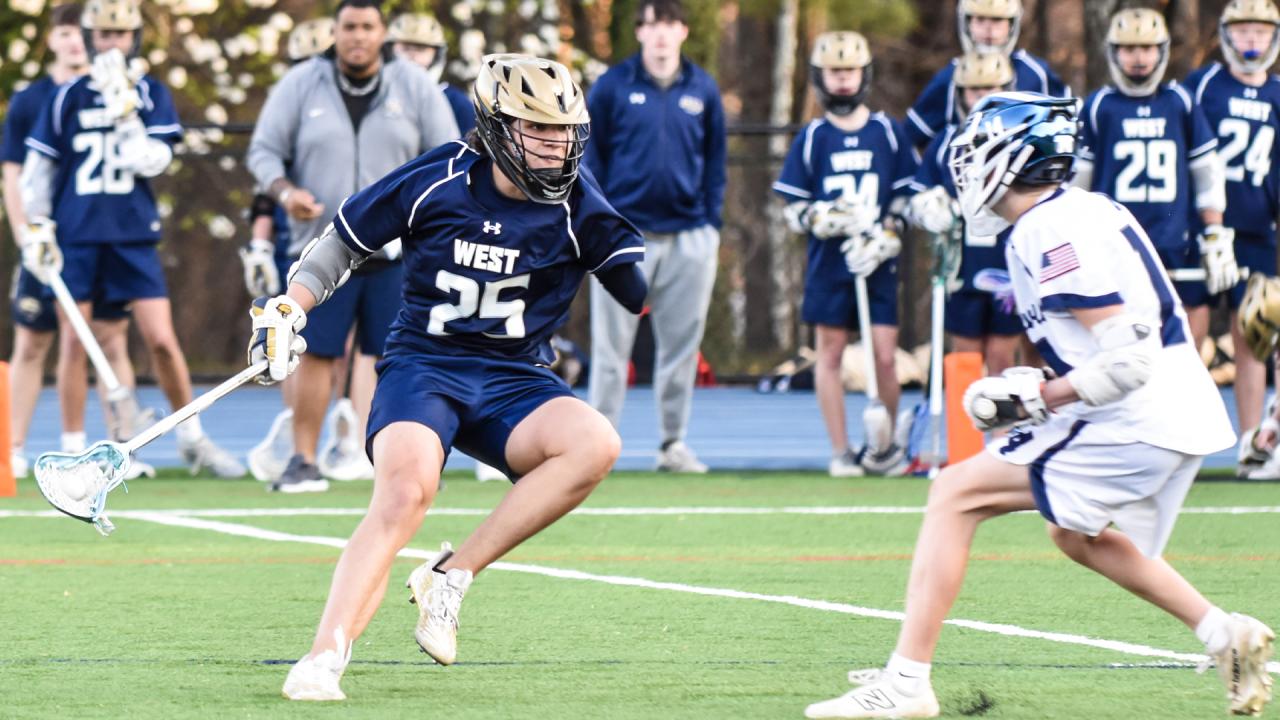
Alex Pain scored his first varsity goal this spring on March 4 in West Forsyth’s 16-2 win over Alpharetta.
Almost four years earlier, the sophomore attackman lost his left arm in an ATV accident.
“He just does some things that make you shake your head and say, ‘How did he do it?’ West Forsyth coach John Laden said. “It’s amazing. He’s a really good player.”
Pain has come a long way since his traumatic accident left him an amputee. He woke up in the hospital, still supported by a cautionary neck brace that prevented him from looking around. When his mom walked in, he had to ask: “Is my arm gone?”
Kristen Pain had to tell her son yes. He also had a broken nose and lost a tooth in the accident, but those could be repaired. Losing an arm was a lot for a sixth grader to take in, but Pain handled it better than could be expected.
“I remember being sad at first, but then days into it kind of motivated, because you start to realize you’ve got to build your own path,” he said. “You can prove to the world that you don’t need two arms.”
In a program that emphasizes the ride, Pain is one of the best at winning back the ball. He’s aggressive with a relentless engine. And he’s motivated to continue to develop further with two years of high school left.
“He just never, never, ever gave up,” Kristen Pain said. “He was out there practicing as soon as he was able. He had to learn obviously everything all over again and how to use the stick with one hand.”
Attending the NubAbility All Sports Summer Camp for limb-different and amputee children helped. Pain traveled to Illinois for the four-day event, meeting coaches who worked on skill development from their own experiences. There, he also met Nubs & Stumps Lacrosse Club founders David DiPiazza, Matthew Freitas and Miles Moscato.
“They helped me a lot when I was at camp, especially right after [the accident] when I was starting to get back into lacrosse and taking it more seriously,” Pain said. “They helped me with so much that I never would have gotten from a normal coach.”
Pain can foresee someday playing with the club that offers competitive lacrosse programs for limb-different and amputee athletes. They will host their first standalone lacrosse camp this year. He would like to compete in the Adaptive Lacrosse Games and the Paralympics. This summer, he is looking forward to being a junior coach at the NubAbility camp.
“I can help out and coach all the younger kids that maybe aren’t as confident with their limb difference or don’t know how to do it yet,” he said. “You can just teach them everything you know and instill a positive mindset and attitude on them.”
Adaptive lacrosse programming has proliferated in recent years, thanks in part to support from USA Lacrosse, which has developed resources for program leaders to help streamline their offerings for athletes of all abilities.
Pain has plenty of positive experiences to share in the aftermath of becoming an amputee, and finding success on the lacrosse field is an important part of his overall development.
“When I had two arms, I was cocky. I’d rub it in your face,” Pain said. “Losing my arm humbled me. It helped me learn how to work so much harder than I ever have. And it’s taught me ways to just get around things that someone else would never have to worry about. It’s built character and taught me so much.”
It’s all about having a positive mindset — saying you can do it and there’s nobody that’s going to stop you besides yourself.
Pain’s faith and family helped get him through the early days and the Cummings, Ga., community rallied around him and his parents, older brother Mickey and younger sister Natalie. In the first year after his accident, he had five surgeries to clean up the 10-inch stump that remained after his amputation. He adapted, relearning to tie his shoes and brush his teeth.
“It’s all about having a positive mindset — saying you can do it and there’s nobody that’s going to stop you besides yourself,” he said. “And if it’s God’s plan, then it’s all going to work out.”
Pain never doubted he would resume playing sports. He was back on the football field within six months of the accident.
“Giving sports up was not an option,” his mother said. “As soon as the doctor approved him, he was back on the field.”
Pain hadn’t played lacrosse since fourth grade, but watching his brother — a defenseman for West Forsyth — inspired him. He vowed to pick it back up regardless of his new limb difference and started playing with the seventh-grade middle school team.
“I’ve adapted well to it,” he said. “It’s the physicality, the competition and the team bonding that’s really cool.”
His training has been tireless. A video posted in January by Creative Dynamic Sports shows him developing his footwork with a stick in his hand. He played inside linebacker for the West Forsyth JV football team last fall. He was named MVP of their JV boys’ lacrosse team in 2025. This year, he is JV captain and an occasional varsity callup for the Wolverines, a perennial state playoff contender in Georgia.
“It’s certainly amazing what he does with one hand,” Laden said. “His deception, the way he plays, his work ethic on the practice field, in the weight room — I can’t describe enough about what an incredible young man he is and where he’s come to that level. He’s terrific.”
What has stood out to Laden is that Pain never says he can’t do something. He doesn’t miss workouts and leads by example. He’s been able to adapt his skills along the way to contribute on attack.
“Dodging to my left was always a big challenge,” Pain said. “I’d always considered, maybe I don’t play attack. I talked about it with everyone and decided to make my own way. Figure it out. You can do the same things [as other attackmen], but you have to do it a different way.”
Justin Feil grew up in Central PA before lacrosse arrived. He was introduced to the game while covering Bill Tierney and Chris Sailer’s Princeton teams. Feil enjoys writing for several publications, coaching and running and has completed 23 straight Boston Marathons. Feil has contributed to USA Lacrosse Magazine since 2009 and edits the national high school rankings.