
A consistent theme emerged from the NCAA selection committee: wins against top-20 teams matter.
And that became evident Sunday night as the 29-team field was revealed with a history-making “snub” and plenty of conversation about seed lines.
“I would say the two areas out of all [the primary selection criteria] we kept coming back to would have been the top-20 wins and the results against the teams in the tournament,” said Lindsey Thomas, senior associate athletic director at Florida and the NCAA selection committee chair.
That theme ran up and down the S-Curve.
For example, among the top eight teams seeded, all had at least four wins against the RPI top 20, whereas Syracuse (1) and Florida (3), the first teams to miss out on seeding rights, did not.
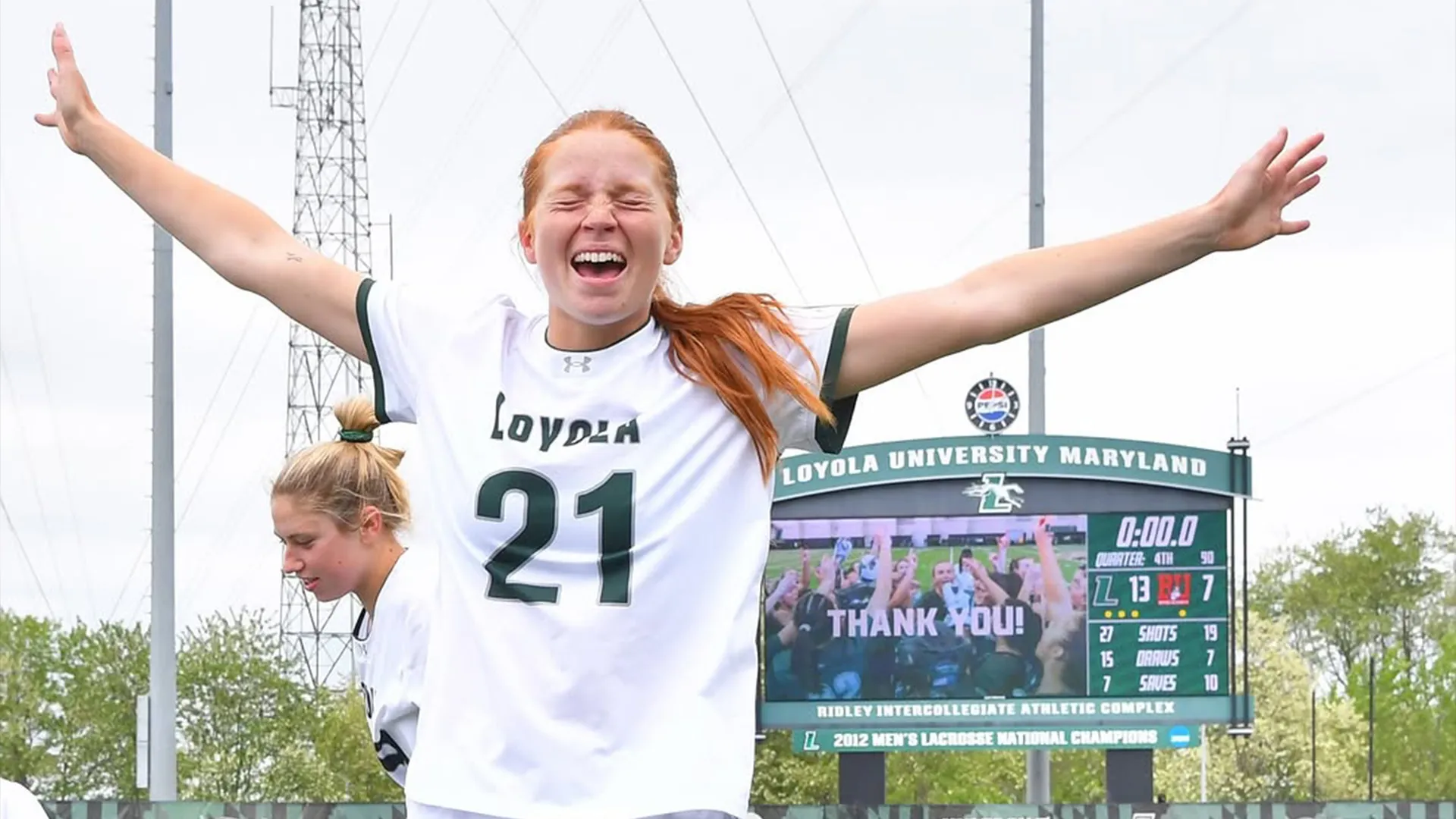
On the bubble, teams like Loyola (RPI 23) and Notre Dame (RPI 30) sported a pair of top-20 wins and were included, while South Florida (RPI 17) was left out because it only had one.
Early release
Fans across the lacrosse world recognized that the matchups were available to the public before ESPNU went on air to reveal the bracket.
A statement from the NCAA:
“It was an unfortunate glitch, and it revealed four divisions: one, two, and three across men's and women's lacrosse on NCAA.com. It was unintentional and we've sent it for all the committees to review. Obviously, each committee is looking for providing a positive experience for the student-athletes. And it was inadvertent and they had no intention of revealing it. It's just an unfortunate incident that occurred. As soon as we were notified of it, we let our partners at NCAA.com know, and we tried to take it down as quickly as possible, but ultimately damage was done.”
Easy decision at the top
Northwestern, North Carolina and Maryland were revealed in that order, and that was the simplest decision the committee had.
“To be honest, the one, two, three, we had the least amount of discussion on,” Thomas said. “We were all in really clear alignment pretty much from even the last couple days as we continued through the brackets … and this was pretty consistent.”
RPI was not used as a ranking
While a guiding principle, RPI did not rule the day. That was because of how tight the ratings were.
Teams rated 4-9 were in a virtual tie and needed to be broken apart by examining individual results.
Johns Hopkins was seeded fourth over Stony Brook because of more top-10 and top-20 victories, as well as a head-to-head result. According to Thomas, the Seawolves received the No. 5 seed over Navy because they had a top-10 win and the Mids had a significant loss in comparison.
Seeds 7 and 8 went to Michigan and Colorado, respectively. The Wolverines owned the second-most top-20 wins in the nation (eight), while Colorado’s run to the Big 12 championship cemented a seed for the first time in program history.
Colorado’s win, coupled with Yale’s loss to Princeton in the Ivy League championship, dropped the Bulldogs down to 21st in the RPI, which had ripple effects. Colorado owned two top-10 wins and four against the top 20, while Syracuse only had one in each category.
According to the committee, Florida was among the first teams to miss out on a seed and may very well have hosted had it won the Big 12.
USF highest RPI team left out of field since expansion
Since the field expanded to 27 teams in 2018 (now 29 today), no eligible team rated 21st or better in the RPI had been left out of the tournament — until Sunday night.
South Florida now carries the distinction of the team with the highest RPI not to make the field at No. 17.
“So again, the RPI is just one of those measures. It's not the ranking, if you will,” Thomas said. “And the more that they were compared to that next grouping [of teams], and they just kept getting edged out little by little. And ultimately, again, those top-20 wins, I believe they ended up with just one top-20 win.”
The committee’s decision did not sit well with American commissioner Tim Pernetti.
“No women’s lacrosse team with an RPI of 21 or higher has ever been left out of the NCAA Tournament since the field expanded to 29 teams. @USFWLAX finished the season at 17 and did not get selected while multiple teams outside the top 21 were selected. Unacceptable,” he said on X.
Loyola, Notre Dame get in
The teams Pernetti referenced were Loyola and Notre Dame, rated 23rd and 30th, respectively, in the final RPI.
Notre Dame became the third team to earn an at-large bid with an RPI of 30 or higher. Both the Fighting Irish and the Greyhounds got in because each had two wins over top-20 opponents,
All three teams carried losses to teams that didn’t make the tournament: USF vs. Richmond; Loyola vs. Holy Cross; Notre Dame vs. Virginia.
History makers
Two teams will be making their NCAA tournament debuts: Davidson and Stonehill. Davidson captured the Atlantic 10 title as the No. 4 seed and Stonehill earned the NEC bid as the No. 2 seed.
On the seed line, Colorado will be a first-time host, and the Big 12 is a multi-bid league for the first time.
A year after the Patriot League sent three teams to the NCAA tournament for the first time ever, it happened again as Navy, Army and Loyola all qualified.
The Favorite
Northwestern (15-3) enters the tournament on a 10-game winning streak, which includes going undefeated in the toughest league and adding a win over North Carolina. To top it off, Northwestern won’t have to leave Evanston to win a national title as it hosts the semifinals and championship game for the first time.
The Dark Horse
Navy. The Mids (18-1) are a bit of an unknown quantity having not faced any of the other seeded teams. Cindy Timchal’s bunch could surprise and make a second run to the national semifinals.
Last teams in: Yale, Rutgers, Notre Dame and Loyola
While not revealed who the last team was, Loyola seems to be the team that got in.
First teams out: South Florida, Richmond, Georgetown, Cornell
The Bulls were the clear first team out despite Richmond beating them in the regular season. The Spiders had two losses to RPI 30+ teams.
Biggest Snub
South Florida. In a year of parity, the RPI wasn’t enough of a factor. The Bulls had a weaker strength-of-schedule (38th) compared to Loyola (11th) and Notre Dame (31st).
“
@USFWLAX finished the season at 17 and did not get selected while multiple teams outside the top 21 were selected. Unacceptable.
Toughest Draw, Part I
No. 8 Colorado. While the Buffaloes get to host, they must face a Jacksonville team whose five losses are by a combined seven goals. The Dolphins already took Colorado to OT earlier this year.
Should Colorado survive that, they’ll either face Florida for a third time or rival Denver again. Whoever advances from that pod will likely face Northwestern on the road.
Toughest Draw, Part II
No. 5 Stony Brook. The first round will be a breeze, but the second-round matchup against either Boston College or Yale will be a chore. The Eagles racked up some crucial wins late in the year, while Yale’s defense can frustrate.
Should the Seawolves advance, they could face No. 4 Johns Hopkins, who was the last team to beat them.
Upset Alert, Part I
Jacksonville at Colorado. As stated above.
Upset Alert, Part II
Penn State over Stanford. he Nittany Lions have played superior opponents close all season (three one-goal losses). Surely they can break through one time, right?
Revenge Fuel, Part I
Pretty much the entire Boulder pod, especially if Florida and Colorado face off in a rubber match.
Revenge Fuel, Part II
Stony Brook against Johns Hopkins in a potential NCAA quarterfinal. Neither has reached the NCAA semifinals.
Don’t be surprised if…
Chalk trumps parity. The top three teams distanced themselves from the pack and are favored to reach the semifinals.
Players to Watch
Isabella Caporuscio, M, Stony Brook: A do-everything player, Caporuscio leads the Seawolves in goals (60), points (76), ground balls (51), caused turnovers (48) and is second in draw controls (54).
Alyssa Chung, A, Navy: The Mids’ leading scorer, Chung has 72 goals, 30 assists, 20 caused turnovers and 15 draw controls.
Chloe Humphrey, A, North Carolina: The 2026 Tewaaraton Award favorite has a nation-leading 92 goals and 133 points en route to ACC Attacker of the Year honors.
Mae Murphy, M, Loyola: The freshman phenom and Patriot League Rookie of the Year leads all players in the NCAA tournament with 12.11 draw controls per game. Her 225 draw controls are the most by a freshman in Division I history.
Reagan O’Brien, D, Johns Hopkins: The Big Ten’s Defender of the Year for a second straight season, O’Brien again leads the nation in caused turnovers (75) and ground balls per game (3.88).
Allison Reilly, A, Army: The distributor for the Black Knights, Reilly has amassed 68 assists. Her 4.00 assists per game are the most by any player entering the NCAA tournament, and she’s second in the nation in points per game (6.76) behind only Humphrey.
JJ Suriano, G, Maryland: The Big Ten Goalie of the Year ranks second in the nation with 197 saves backed by a .517 save percentage, which is third nationally.
Madison Taylor, A, Northwestern: Once again the Big Ten Attacker of the Year and one of the top candidates for the Tewaaraton Award, Taylor has 80 goals and 111 total points, both ranking second nationally.
You’ll hear a lot about…
Big Ten dominance. The conference got a league-record six bids and a field-best four seeds.
Predictions
North Carolina and Maryland win a pair of games and finally meet in the NCAA tournament for the first time since 2016.
They’re joined by top-seed and host Northwestern as well as first-time semifinalist Johns Hopkins.
We are treated to an awesome championship game where Northwestern validates its regular-season win over Carolina.
Grading the Committee: A-
The NCAA selection committee was solid and consistent. The correct eight teams received seeds. Although USF is heartbroken, Loyola and Notre Dame are better teams and will provide more quality to the tournament.
Some reactions:
- The willingness to look past RPI and seed teams based on results was nice to see. It is appreciated that winning games matters
- It is refreshing to see Colorado get rewarded for a great season
- It might have been nice to see fewer first-round rematches (Princeton-Rutgers, Jacksonville-Colorado, Syracuse-Loyola)
- There is a case for one-loss Navy to be seeded ahead of two-loss Stony Brook
- Bracket integrity was kept as close as possible given the geography constraints
That said, questions still remain. If the No. 17 RPI team doesn’t make it, but No. 30 does, is it time to do away with the RPI and explore a different formula? It sounds like that will be discussed, but a change isn’t imminent.
“I think the committee plans to talk about it, but with any selection criteria change, it would not be immediate,” said Caleb Kolby, assistant director of championships and alliances at the NCAA. “They would look at this. They would work with the coaches’ association. They would want to make sure people feel really good about it.”
Bracketology Breakdown Evaluation
The last projection saw the correct eight seeded teams earn hosting rights and five of eight seeds in the correct spot. The biggest miss was Navy, projected fourth and seeded sixth, while Hopkins and Stony Brook were moved up one spot each.
This year was so close to 29-for-29. This year’s projection got 13 of the 14 at-large bids correct with USF missing out and Loyola getting in.