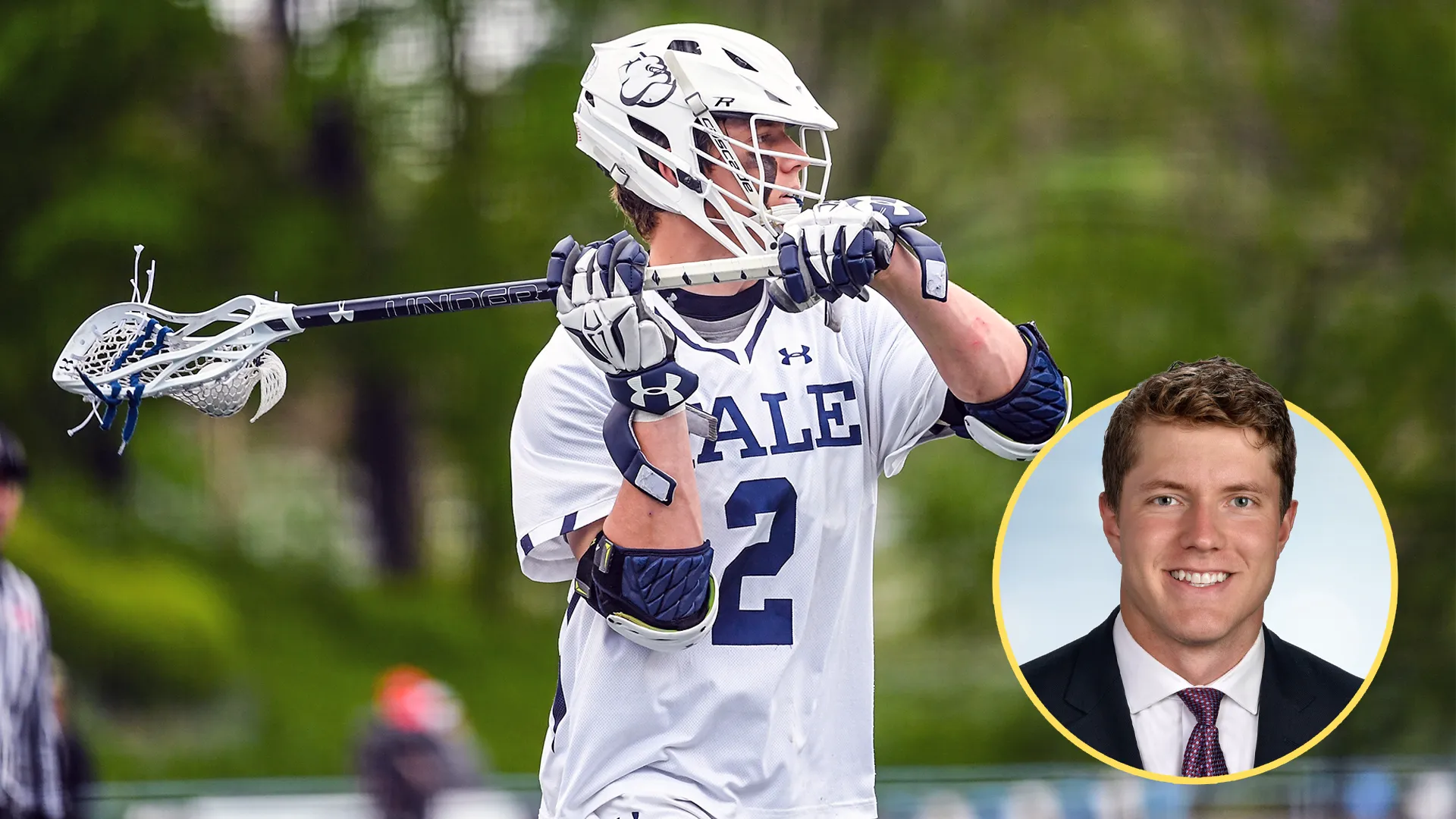
Eight years after winning the Tewaaraton Award, Ben Reeves is at the top of another field.
Reeves is a second-year resident at Arizona’s Barrow Neurological Institute, studying to be a neurosurgeon in healthcare professional network Doximity’s No. 1 ranked program in the United States.
“If you can learn how to get really good at one thing — whether that's athletics or playing the piano, whatever it is — you can apply those same principles and same work ethic and put it into something else,” Reeves said.
Reeves led Yale to its first NCAA championship in 2018 and is the only Bulldog player to earn the Tewaaraton. He says the two go hand in hand.
“I still think the combination of the two of them is probably the coolest thing I'll ever do in my life,” Reeves said. “I don't think anything will rival that again.”
Now as a neurosurgery resident in the seven-year program, the team aspect comes into play every day as part of a medical team working for the best patient outcomes. He was one of four residents accepted by Barrow in 2024.
“It’s pretty similar to getting recruited and playing at Yale,” Reeves said. “You show up on day one, it's intimidating. There's a lot of big names within the neurosurgery field here, icons in their respective domains. And then same thing, it's just listening to everything they say, learning everything that they do and how they went about their process.”
Reeves said he suffered from imposter syndrome when he got to Yale. He was lightly recruited out of Palmyra-Macedon (N.Y.), even though his 585 points on 278 goals and 307 assists ranked second in the state all-time and ahead of such names as Casey Powell, Lyle Thompson and Joey Spallina. He committed to Hobart before a coaching change opened his recruiting and Yale came asking.
“I looked at the New York state scoring records and all the public-school guys who had scored that many points had been basically All-Americans in college,” Yale coach Andy Shay said. “So a little bit of money ball.”
Reeves wasn’t so sure.
“I used to just try to dream or envision a life within expectations,” Reeves said. “And the goal is to, maybe by junior year, get some playing time and get a goal or two here and there. Things obviously took a different turn for the better, I suppose.”
Reeves set a school freshman scoring record in his first spring, worked to fill out his 6-foot-3 frame to 215 pounds through his years and continued to downplay his accomplishments that mounted with each year. As a senior, he was surprised to be voted captain, even though he was coming off back-to-back Tewaaraton finalist seasons.
“He's just unbelievably humble,” Shay said. “He thought he always had to work hard and he did.”
Reeves’ work ethic is legendary. His doubts or fears served as a starting point to drive him to be better. At the same time, he’s also quite goal oriented.
“Especially at Yale and over the years now, you find a balance that still exists,” Reeves said. “But you've got to have some confidence to some degree. It's a tricky balance. When I got to Yale, it was pathologic. Staying up way too late, getting up way too early, just trying to do and fit way too many things into one day.”
During his Yale undergraduate studies, Reeves discovered several neuroscience classes of interest and he went on to work in a neurosurgery lab. He remained in New Haven, curtailing his Premier Lacrosse League career after four seasons to finish Yale Medical School. His research has been cited or published on numerous occasions, and now at Barrow he’s working his way up in a new field.
“I just always wanted to be the hardest working person in the room, no matter what it took,” Reeves said. “And I don't really know exactly where that came from.”