
Ryan Sanders’ 2026 NCAA Division III playoff run was unrivaled.
Tallying 33 points, including 23 goals and 10 assists, the sophomore’s consistent production was a key factor in RIT making it to the national championship. He leveraged his breakout into a Division I roster spot, landing at Utah following an active summer in the transfer portal.
Sanders’ success comes as no surprise to the MCLA community. The former Cal Poly attackman dominated at the club level, consistently making All-American teams and winning awards such as the WCLL Offensive Player of the Year. It was clear Sanders would succeed at whatever level he chose.
The Alamo, Calif., native is an example of the recent trend of college players broadly considering all levels of competition to find the right experience for them.
In recent years, the number of players transferring from all three levels of the NCAA to the MCLA and vice versa has drastically increased. As an alternative to the rigors of pure varsity, the MCLA’s “virtual varsity” ethos has enticed players looking to play at a high level with a more flexible commitment and increased campus freedom.
While the example of Sanders succeeding at the NCAA levels is a source of pride across the MCLA community, it is the movement to the MCLA that has lacrosse buzzing. Lacrosse fans are familiar with current Philadelphia Waterdogs midfielder Dylan Hess’ decision to use his grad year at Florida and play for the Gators’ club team.
But as tracked by Varsity Club Lacrosse, more than 50 former NCAA players will suit up for MCLA teams in 2027.
This influx of talent has shot up the level of play in the MCLA — even to the point where scrimmaging some of the top club teams is a legitimate and serious option for NCAA and NAIA programs.
The success of the MCLA in this new world stems from the way it is absorbing this talent to broaden the range of experiences available to all players on the club scene. The days of club lacrosse being viewed solely as a recreational alternative has changed with the MCLA membership filling the entire spectrum from virtual varsity to traditional clubs. And it has done this largely without sacrificing its more relaxed club identity.
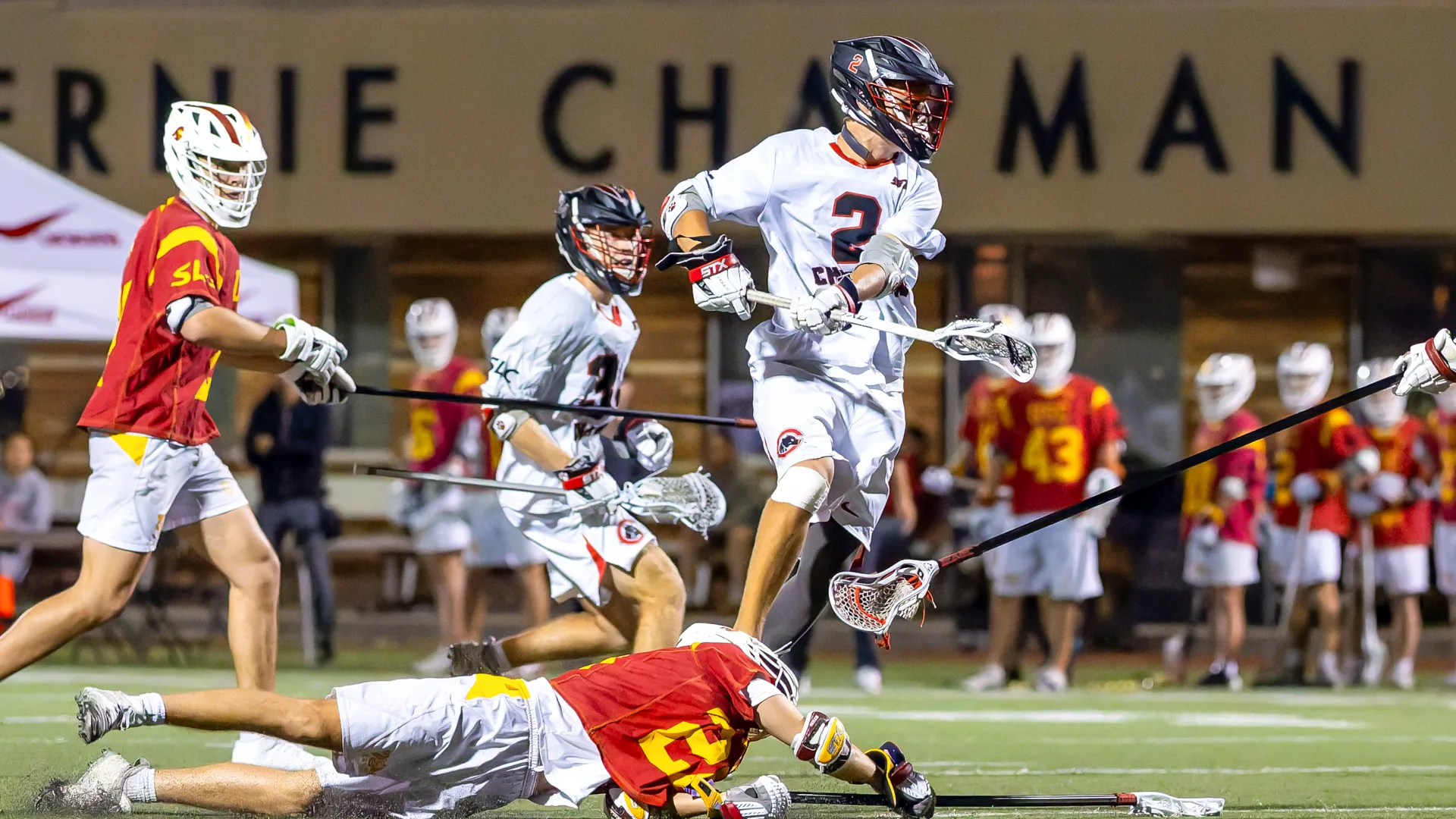
For some schools, the virtual varsity experience is exactly the point. Liberty, Utah Valley and Chapman, for example, have invested heavily in their lacrosse programs, mirroring the attributes of an NCAA program. The lifestyle of a large FBS football campus with a relaxed practice schedule also remains broadly available to students who want such an experience.
“Lacrosse for everyone” and “grow the game” are popular expressions in the lacrosse community. Arguably, the MCLA provides the broadest range of experiences fully accessible to college-aged players. This fully structured version of a club sport, which includes three divisions and dozens of conferences, allows for players of all skill and interest to find the home they want within lacrosse.
This evolution has created a unique landscape. Players who may have been overlooked by NCAA recruiters or simply wanted a different college experience now have another legitimate path to high-level lacrosse on a fully national level and with every flavor of student life.
As a result, the performance gap between the top MCLA teams and NCAA schools continues to shrink. Exhibition games and scrimmages that once were one-sided are becoming increasingly competitive, and in some cases, MCLA teams are earning outright victories.
Players and the broader lacrosse world are starting to take notice.
The MCLA experience has broad appeal because of one simple thing: freedom. Players aren’t committed to packed daily schedules and are allowed to participate in their campus’ traditional social life. It is the option to choose lacrosse, rather than to be obligated to it.
“In the MCLA, there’s still a commitment to improving and competing, but there’s more flexibility and a better balance between lacrosse, school and having a social life,” said Adam Horcasitas, a Chapman player and NCAA Division I transfer from Mount St. Mary’s. “That’s one of the reasons I've enjoyed the MCLA experience more.”
That freedom does come with certain tradeoffs. A flexible commitment means less time on the field to practice, and hence a different product. Notwithstanding the talent influx, the MCLA remains committed to staying in its lane of the college lacrosse world.
In the end. the decision on what to value comes down to personal preference. Among the benefits that come with the MCLA is an increased focus on studies on the players’ terms.
“With the NCAA, telling your coach, ‘Hey, I have to study for a test, can I miss this practice?’ He’s gonna say no. You’re gonna have to be there,” said Louden Hickman, an Auburn player and NCAA Division II transfer from Lenior-Rhyne. “But with the MCLA, we're able to text our coach saying, ‘Hey, I have a quiz coming up. I have a test coming up. Can I take this practice off to study?’ And they'll be like, ‘Yeah, your grades are way more important.”
Additionally, there is the broad availability of large-school campus experiences that is less common in NCAA men’s lacrosse. The MCLA is home to the overwhelming majority of NCAA Division I FBS schools, particularly in the South and West. MCLA schools such as Georgia, Tennessee, Arizona State, USC and Colorado provide campus men’s lacrosse experiences available only at the club level.
“You’re still getting a good education while also having the opportunity to play against well-known schools,” Horcasitas said. “It makes the experience more exciting and gives you a chance to compete in games that draw more attention.”
This is what makes lacrosse unique. No other sport offers this range of campus experiences, student life and competitive options. Having many opportunities in lacrosse allows players to choose the sport and their college in the way that is best for them.
The MCLA is filling the gaps, which is critical in making lacrosse truly for everyone. And at the collegiate level, the association is second to none in growing the game.