
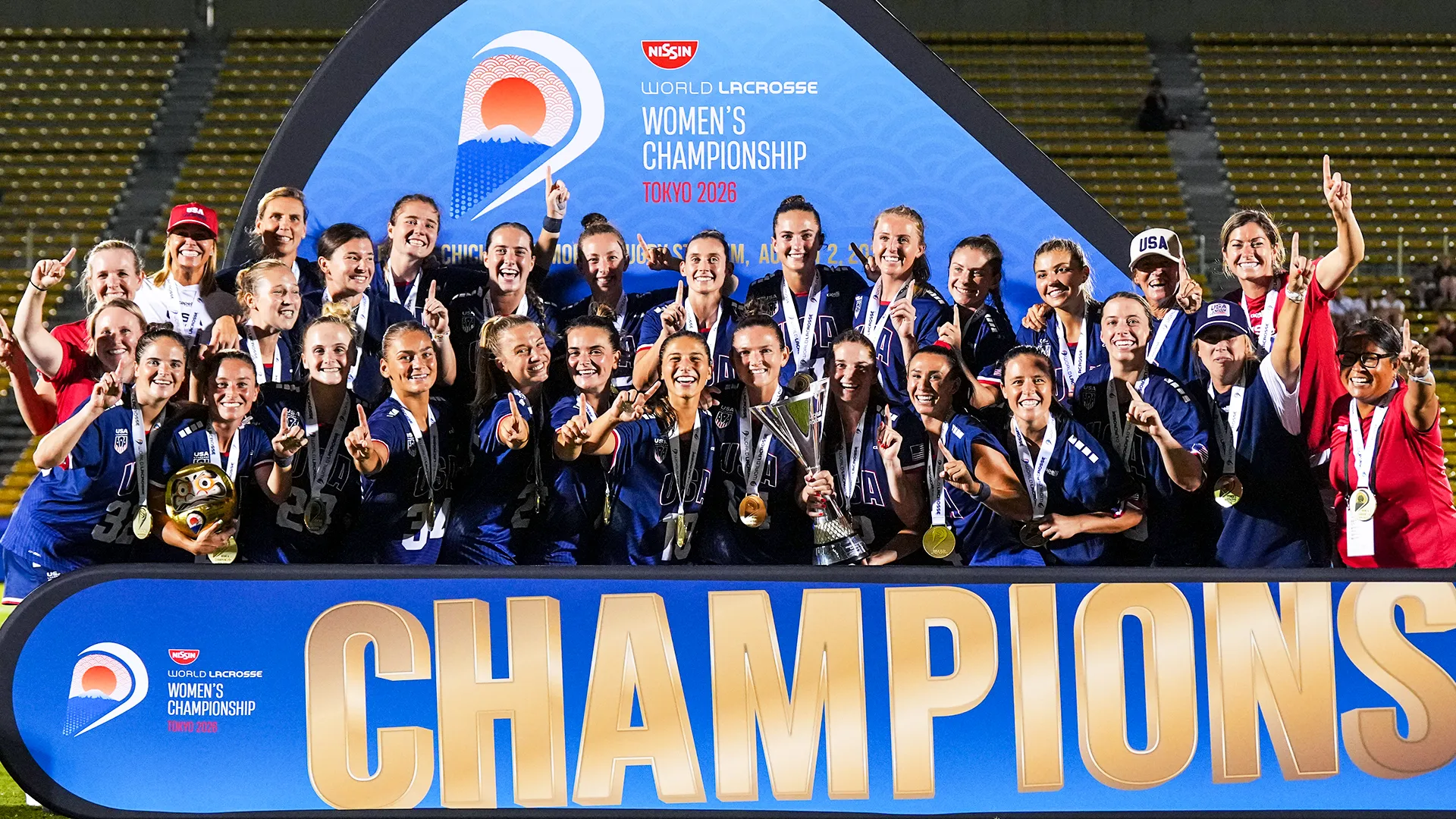
TOKYO — In Japanese culture, a Daruma (Japanese: 達磨) is a hollow, round doll usually made of papier-mâché. They’re weighted at the bottom so that they’ll always return upright when tilted over.
They bounce back. It’s a characteristic that’s come to symbolize how the owner can have success by overcoming adversity. They’re seen as a talisman of good fortune, making them a popular gift of encouragement.
At the 2026 World Lacrosse Women’s Championship, player of the match honorees were awarded Daruma dolls and handed a black marker. They were instructed to fill in the blank eye of the doll and make a wish, as per the tradition.
Shea Dolce wouldn’t reveal her wish. Neither would Emma LoPinto. But it’s safe to say both wishes came true. The U.S. Women’s National Team steamrolled its way to perhaps the most dominant showing in the tournament’s history, beating Canada 16-4 to win its fifth straight gold medal and 10th in the program’s history.
The U.S. outscored opponents 123-27 in six games.
“You can’t talk about your wishes,” said Dolce, who stymied the Canadians with eight saves in the championship game. “Otherwise, they won’t come true.”
Ironically, head coach Acacia Walker-Weinstein made no secret what her wish was for this team. The message was clear as day from the moment she took the job on April 11, 2024. She wanted this to be the best women’s lacrosse team ever assembled.
The post-tournament comments on social media seemed to indicate she achieved that mission. Commenters likened this run to that of the 1992 U.S. Olympic Men’s Basketball Team — aka the Dream Team.
The roster that featured 11 future Hall of Famers went 8-0 and won every game by at least 32 points. It’s widely considered the most dominant American sports team ever.
“
They played the right way. That's what we wanted. They are the best of all time.
This roster, though, took a hit before the event even began. Charlotte North tore her Achilles tendon on June 6. The attacker was kept on the final 22-player roster anyway. That was an easy call for Walker-Weinstein, who deemed North too valuable in too many ways to leave behind.
That decision proved fruitful before the first game against Ireland, as North delivered an impassioned pregame speech.
“It’s not lost on me that I get to share a bus with you guys,” North said. “I get to share a team room with you guys. I get to watch you dog it out here. When you’re dying, when you guys get goosebumps today, when you guys feel like you’re gonna see the light and see God just look over at me and I will give you whatever you need. I believe in you guys.”
That speech made midfielder Anna Brandt feel “like I could do anything.” Brandt proceeded to net a hat trick — on her 24th birthday, no less — and was hoisted onto the shoulders of her teammates while they sang to her.
An 18-5 win over Ireland was perhaps prophesized by Walker-Weinstein’s luck. At the previous day’s practice, she found a four-leaf clover that foreshadowed the dominance to come. Still, this coaching staff didn’t settle for anything less than near-perfection.
The team meeting that night in a conference building just across the street from the Prince Hotel Shinagawa, where the team occupied half of the 20th floor, wasn’t all laughs.
Defensive coordinator Melissa Lehman called out individual players who missed assignments or were beaten by their matchups. Players took accountability for what they deemed to be their own mistakes. Team manager Jen Kent, effectively an extra defensive guru on the staff, harped on communication issues. She threatened that players would be taken off the field if they didn’t communicate better.
The goal was to hold opponents to fewer than five goals. Giving Ireland a fifth tally was unacceptable.
“If you’re competing at a high level, you’re communicating,” Walker-Weinstein said after her team closed pool play with a 23-2 win over Chinese Taipei. “The second you stop communicating, you’re telling me that you’re not really competing. It’s about consistent communication throughout the possession, throughout the quarters. When you’re up, when you’re tied, when it’s the beginning of the half, all of it. But I do think that it got a little bit better tonight.”
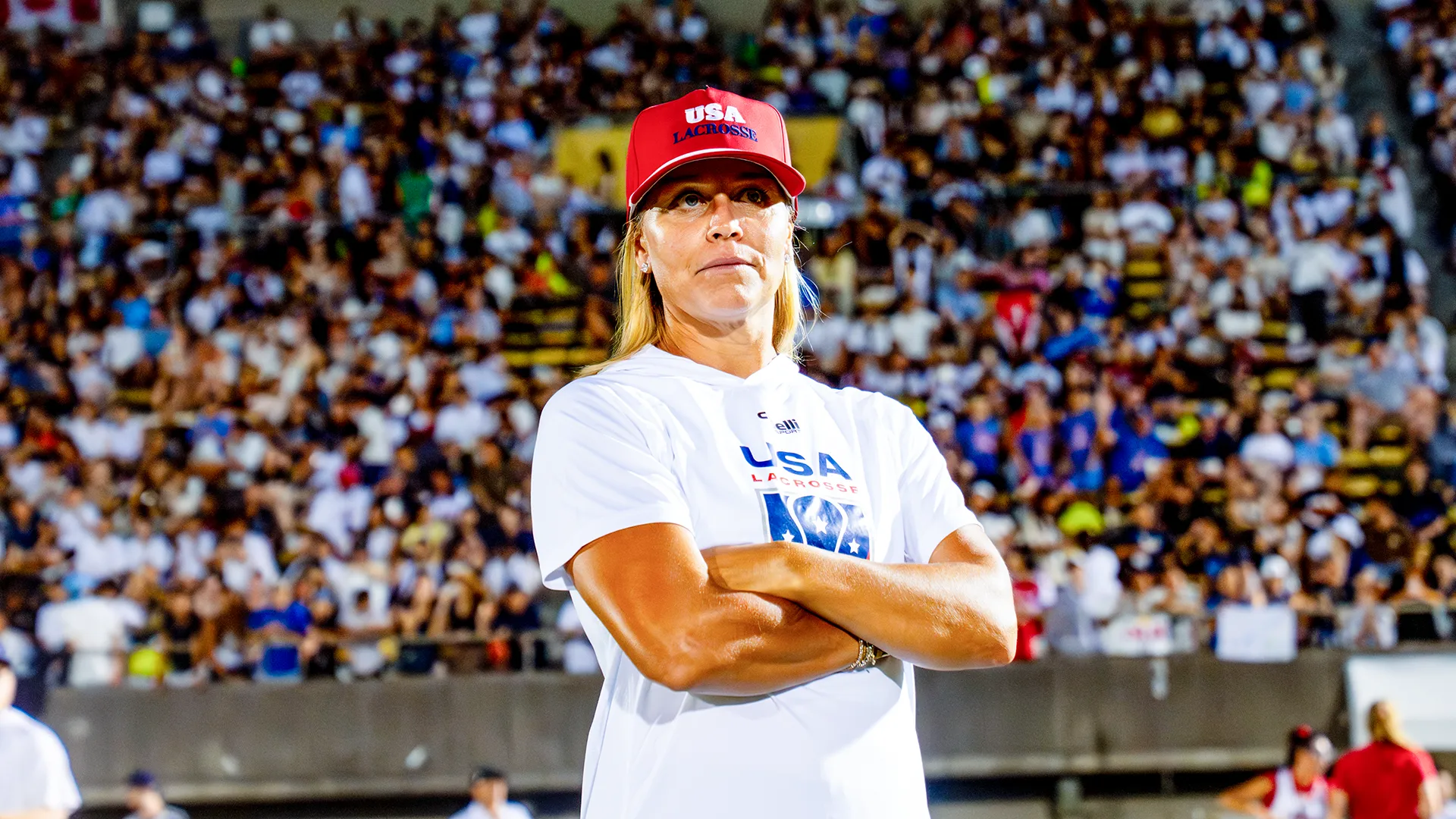
The product on the field improved game over game. Walker-Weinstein demanded they play with urgency no matter the score, and unselfishness was required on a team comprised almost entirely of alphas.
Chloe Humphrey and Madison Taylor — the last two Tewaaraton Award winners in college lacrosse — finished first and second, respectively, on the team in points.
But they were far from ball hogs. They were anything but. Humphrey had 10 assists; Taylor had seven. Top-10 leaderboards were littered with Americans. Factoring in statistical ties, six players were in the top 10 in goals. Ten players found themselves tied for places on the top-10 assists leaderboard.
It all came together because players embraced their roles and acknowledged they could beat other teams with both their footspeed and ball speed. They passed the ball so fast through the midfield and on attack that defenses simply couldn’t keep up.
It also meant that everybody ate. No play was designed for a singular person. The person who had the best look took the shot — and often those shots were layups. Goalie coach Devon Wills scouted tendencies and provided attackers with the best strategies for exposing opposing netminders.
“We have an army,” offensive coordinator Kayla Treanor said during a walkthrough the day before the gold medal game. “Every single person contributes here.”
Dodging, to a degree, seemed frowned upon. There was no need to force the issue on a team this talented. Walker-Weinstein credited the captains — Sam Apuzzo, Kenzie Kent, Marie McCool and Caylee Waters — for setting the unselfish tone.
“You get here and you want to get yours, but they’re not playing like that,” Walker-Weinstein said before the 19-7 semifinal win over Israel.
McCool, who became the eighth player in U.S. Women’s National Team history to win three gold medals, credited the coaching staff for the culture.
“This team is filled with first-team All-Americans, Tewaaraton winners, MVPs across the board,” she said. “For us to come together and play team lacrosse is something that isn’t always easy to do. But every single player bought in.”
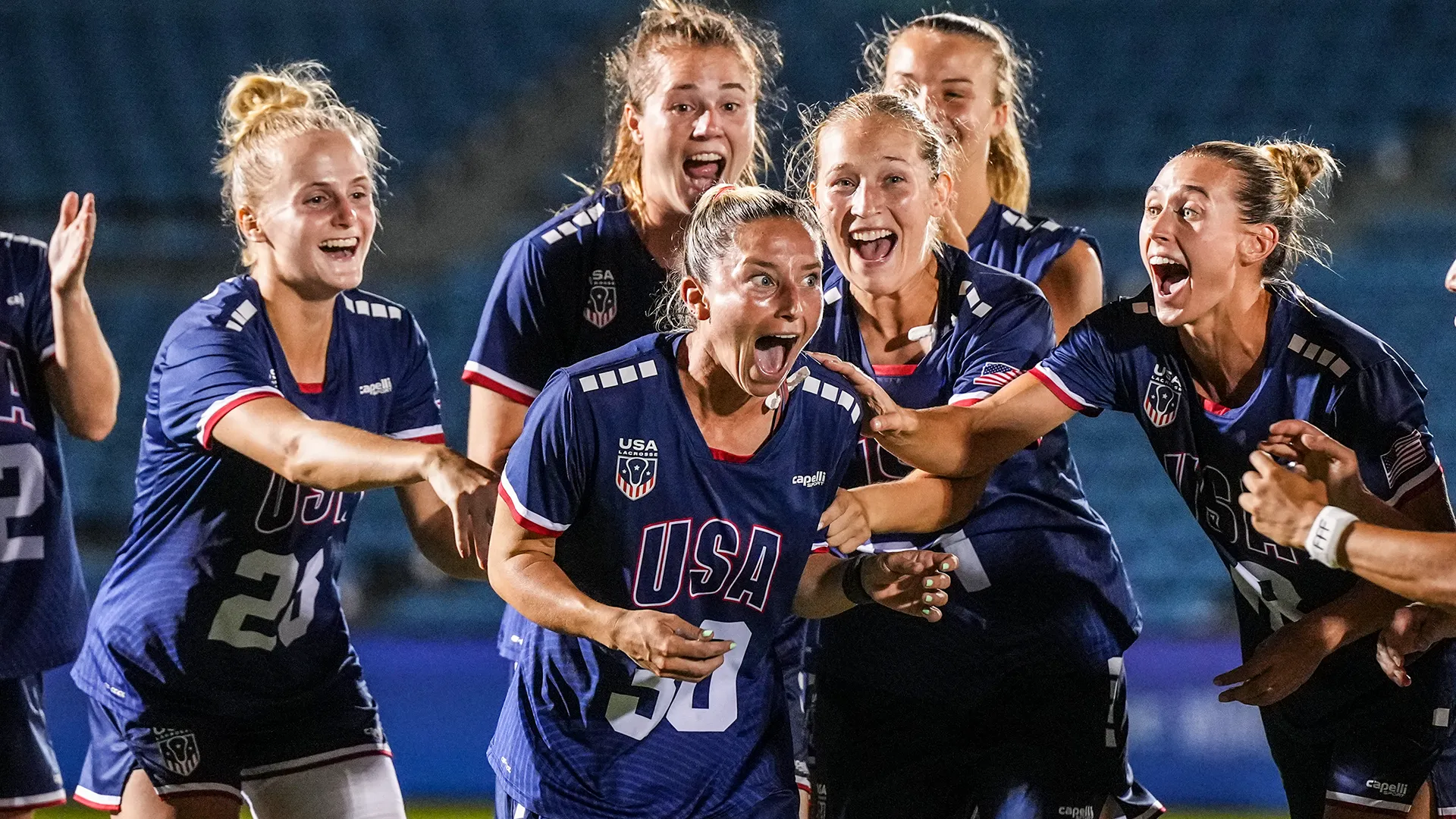
The goal was “relentless, beautiful lacrosse,” as Ally Mastroianni eloquently put it. She was key to making it possible. Mastroianni controlled 48 draws and set the single-game (13) and career program records during the tournament. The USA defense was hardly ever overworked because other teams just didn’t touch the ball.
When they did get the ball into the attacking end, it wasn’t there for long. Sydney Scales, Katie Goodale, Sam Forrest, Shea Baker and Kori Edmondson wreaked havoc and sent the ball to players like Brigid Duffy and Ally Kennedy, who used their breakneck speed in the midfield to clear and initiate offense.
Kennedy was named the tournament’s MVP after compiling 10 goals, six assists, five draw controls and four ground balls. She also played sturdy 1-v-1 defense. Kennedy’s trophy case now includes a field MVP award and the inaugural women’s box MVP award.
“This is the prettiest lacrosse I’ve ever seen and ever been part of, and it’s a huge honor to be part of that,” Mastroianni said.
To produce such a picturesque product given the conditions makes it even more remarkable. The trip started off ominously, with poor weather on the East Coast impacting flights to Los Angeles for the team’s staging camp at UCLA. Only seven players and three coaches were there for the first day. Seventeen more players arrived the next day. Emma Muchnick only got there about 16 hours before departing for Tokyo.
Then, it was unseasonably warm in Japan — even for July and August — with the heat index reaching 109 degrees (not factoring extra heat coming off the turf) during the team’s first few days in Tokyo. Kennedy called the first practice the single hardest day of lacrosse she’s ever experienced.
They shook off bus rides to the stadium through the bustling Shinagawa City streets that sometimes reached 45 minutes. Some hotel rooms had shoddy air conditioning at best. They slept in twin beds and ate dining hall food that could have been better. The nearby 7-Eleven became a hot spot for sports drinks, smoothies and onigiri.
Still, they played inspired lacrosse with a confidence and swagger that captivated local fans. Japanese youth chanted “USA! USA!” during the knockout rounds. They asked their favorite players for autographs, breaking the language barrier with their love for lacrosse.
Over 3,000 people packed into Chichibunomiya Rugby Stadium for the final. Loud cheers rang through the night even as the margin continued to balloon. The United States never let off the gas.
And for as much luck as the Daruma dolls and four-leaf clovers brought, this team clearly never needed any of it. From start to finish, no other nation could touch Team USA.
“I’m so proud of them. They just played the right way,” Walker-Weinstein said. “That’s what we wanted. They are the best of all time.”