
By Paul Ohanian | USA Lacrosse Photo · July 21, 2026
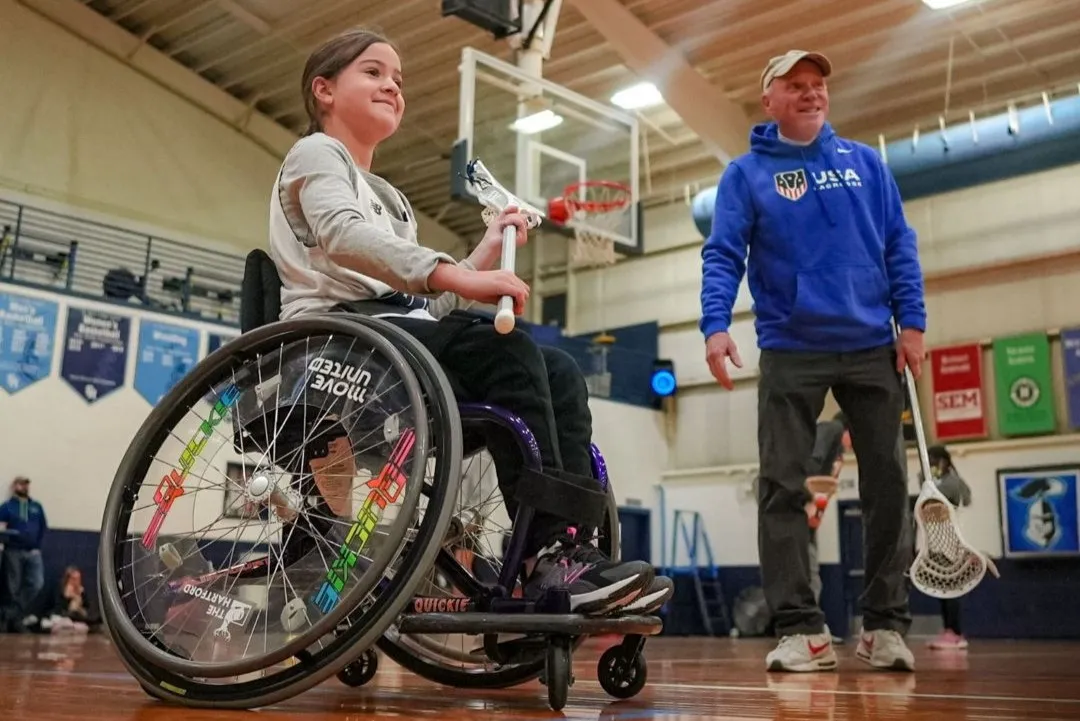
One of the foundational pillars of USA Lacrosse has always been its commitment to fostering a national lacrosse community that welcomes everyone. The organization’s core belief is that broad representation and participation, with access to all, adds significant value to the lacrosse experience for each person.
In support of that vision, USA Lacrosse has developed a new educational resource that explains the fundamentals of Adaptive Lacrosse -- the modified version of the game that is designed specifically for the inclusion, safety, and enjoyment of players with disabilities.
Offered for free to USA Lacrosse member coaches and program leaders, the newest resource is a five-module course that can be accessed through each member’s My Account portal.
Adaptive Lacrosse Fundamentals gives coaches, program leaders, and volunteers the working knowledge to welcome athletes with disabilities into the game and build programs where every player has a place on the field. The five-part series moves from the big picture to the practical, then hands leaders the tools to put it to work on the field.
“We had several objectives in mind when designing this course,” said Shawn Maloney, Manager of Adaptive Lacrosse & Sport Growth at USA Lacrosse. “We wanted to explain the importance of Adaptive Lacrosse to local communities, debunk some of the common myths about disability, and provide practical strategies to help our member organizations become more inclusive and accessible to all players.”
More than 3 million children in the United States have a disability, and 15% of U.S. public school students receive Special Education services, yet less than 1% of students participate in adaptive sports.
“One of the biggest misconceptions is that there aren't enough athletes with disabilities to support a program. They're there, they've just been overlooked or told sports aren't for them,” said Vanessa Dias, founder of Able Athletics in New York.
Research has clearly shown that physical activity for people with disabilities has significant benefits, including increased muscle strength, improved social integration, and decreased pain, anxiety, stress, and depression.
Overcoming some of the barriers that still exist for athletes with disabilities, such as lack of awareness of programming, limited access to equipment and facilities, and negative attitudes and social structures, is the key to unlocking greater participation.
“What we've seen is that when you create real opportunity, families show up not just for the sport, but because they've been waiting for a space where their athlete is included,” Dias said.
The new educational resource outlines several case studies of adaptive programs that can serve as models for new start-ups. While the greatest benefits are focused on the adaptive athletes, program leaders consistently highlight the enriching experience for their community.
“Our athletes, our peer buddies, and our community overall have definitely benefitted from the program,” said Amanda Hope, adaptive program leader for East Bay Lacrosse in Rhode Island. “We have had such a great experience with our adaptive lacrosse program. I can't say enough good things.”
The USA Lacrosse online course is designed in five sections, which can each be reviewed and completed independently. The course includes best practices for starting a new Adaptive Lacrosse program, a discussion about Universal Design, and strategies to support the participation of neurodivergent players on “mainstream” lacrosse teams. The five modules are:
1. Adaptive Lacrosse 101
2. Understanding Disability
3. Building an Accessible Program
4. Coaching Strategies & Equipment Adaptations
5. Supporting Neurodivergent Players
“Ultimately, we hope to raise awareness about Adaptive Lacrosse and provide a blueprint that will help local programs accommodate athletes with disabilities,” Maloney said.
“It’s important to get these athletes involved in the sport and to be a part of something,” said Adam Page of Greater Buffalo Adaptive Sports. “It just matters getting them out there and getting them started. That's all it takes, is just time and effort to get the word out.”
Adaptive Lacrosse
To learn more about Adaptive Lacrosse and access free resources provided by USA Lacrosse, including a Starter Guide, Operating Guide, and Inclusive Playbook, please click here. To access the new online course, please sign in through the My Account member portal (USA Lacrosse AMMS). For questions, please contact USA Lacrosse via email.