
By TrueSport | USA Lacrosse Photo · February 6, 2026
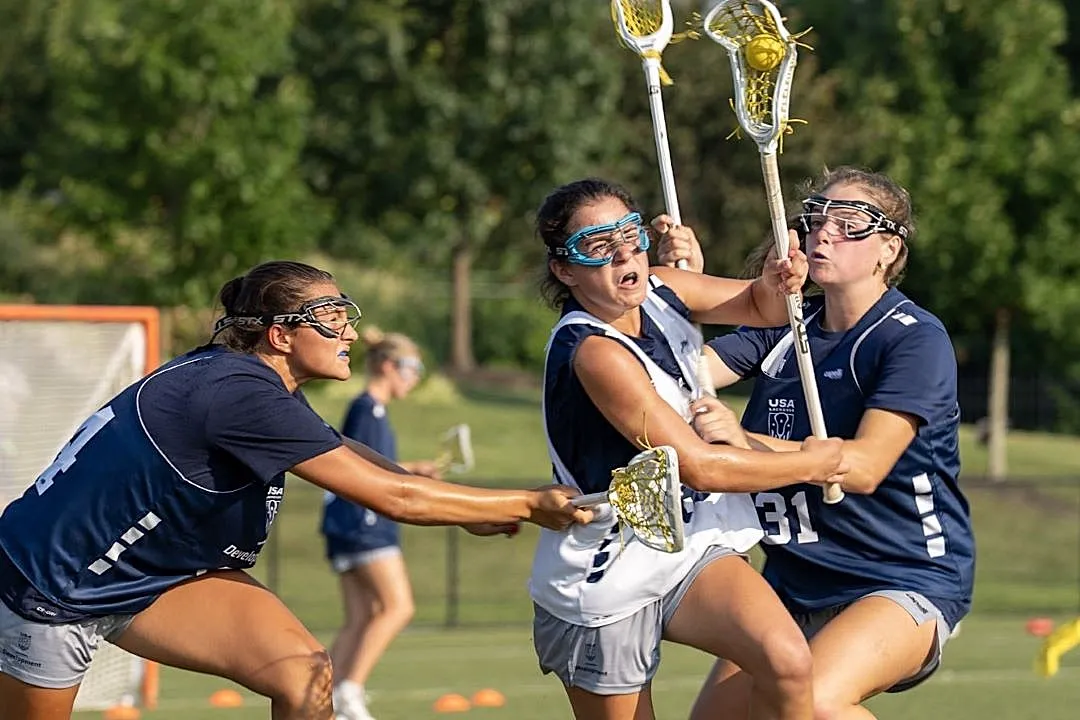
As a coach, you may assume that your role is to protect athletes from failure, make the decisions that you feel are in the best interest of the team, and generally keep the team’s results steady. But viewing your role in this way may be holding your young athletes back from finding their true potential and from the important growth that comes from taking risks and occasionally failing.
Board-certified family physician and TrueSport expert Deborah Gilboa, MD, is sharing ways that coaches can help athletes take (safe) risks, make their own decisions, and live with the consequences.
The importance of risk and consequences
Obviously, when Gilboa is talking about risk and consequences, she doesn’t mean driving without a seatbelt or staying out past curfew. Instead, she’s speaking to the idea of taking thoughtful risks within the relative safety of an athlete’s sport life.
Coaches should not only let athletes take risks and make more decisions in their athletic life but create these opportunities for athletes. Whether that means allowing athletes to design new plays for the team or pick their own captains, decision-making opportunities are everywhere in sport. And these small-scale, low-stakes risks can teach athletes big life lessons.
“We want to find more opportunities for athletes to fail with purpose,” Gilboa said. “Every risk they take is an opportunity to test their resilience. We want athletes to push themselves to the next level, because if they don’t push themselves to the point where they may fail, they don’t learn to deal with failure and navigate towards their goals when they hit roadblocks. We need to give them more opportunities to use their resilience and strengthen that muscle.”
Gilboa says the problem is that we tend to play it safe in the athletic world. “For example, we won’t promote someone to be team captain unless we're positive that the athlete is going to succeed,” she said. “But if the purpose of sport is to strengthen the athletes, rather than just having a winning season, we need to give them chances to fail.”
Progressive risk-taking
While risk and failure are important, Gilboa is quick to add that risk-taking isn’t meant to be truly risky. Rather, it should be done in a progressive, step-wise manner. Work with your athletes to determine a pathway to progress, with small risks along the way. “The process should involve small changes and gradual increases to serve a larger goal,” Gilboa said. “These steps should increase the challenge enough that failure is possible, but not an almost-certain outcome.”
Giving athletes decision-making power
Gilboa also says that we need to give our athletes more opportunities for decision-making. Nudge your athlete to make a decision by providing direction, but not a full decision. “For example, if an athlete needs to improve their aerobic capacity, ask them to help create a plan for how they will do that rather than just creating a plan for them,” Gilboa said. “Or if your team needs to be better at communicating during games, point that out, but make the team decide how they’ll fix the problem.”
Finally, while empowering athletes to make decisions is important, Gilboa notes that this doesn’t mean ceding all team power to the athletes. As the coach, you do need to be part of the decision-making process in some cases. “For example, let them make decisions about plays the team is going to try, but not the starting lineup,” she said. “Or let them collectively choose the structure of team practice, but not the frequency.”
Listen to your athletes
As a coach, it’s easy to say that you’ll allow athletes to make their own decisions and take bigger risks. But often, our protective instincts kick in, and we say ‘no’ when an athlete presents a risk that they want to take.
“Listen to your athlete when they want to make a certain decision or take a new risk,” says Gilboa. “It’s okay to ask them for clarification, or to explain their strategy, or point out that their planned progression may be too aggressive. Ask questions and push them to defend their choices, but truly listen and be willing to give them the chance if they make a strong enough case.”
Preparing for and coping with consequences
The final step of allowing athletes to take risks and make decisions is to make sure that they are prepared for the potential consequences when a risk doesn’t pay off, or the decision was the wrong one. “As a coach, you need to have a plan for when it is harder, scarier, or doesn’t go as well as you and your athletes thought it would,” Gilboa said.
This could mean allowing athletes to choose to step away from a risk if they don’t feel ready. “If your athlete is up on a higher dive platform than they’ve ever been on, and they realize that they don’t actually feel ready to make that attempt, the athlete should feel comfortable saying that they’re not ready and stepping away from that dive,” she adds. “That takes a lot of courage, and it’s such an important skill.”
Athletes also need to be prepared for the chance the dive doesn’t go as planned. Before taking the risk, the athlete should understand the possible consequences, whether that means the physical risk of a dive going poorly or the emotional risk of a lower score.
While we should celebrate failure as an opportunity for growth and a sign that your athletes are pushing themselves, Gilboa also notes that if an athlete is failing consistently, you may need to work with them to create a progress plan that includes smaller steps. Continuing to fail without any successes often indicates that your athlete is trying to progress too quickly.
“As adults, we try to protect young people from consequences, instead of letting those consequences play out with empathy,” Gilboa said. “Unless an athlete is in actual danger, these failure moments are where the athlete learns. It’s where they learn what they're capable of and what strategies they can use to get themselves to a place where they're okay again.”
Takeaway
As coaches, we need to allow kids to make decisions and take risks, even if that may impact the team’s chance of winning. Part of growth is learning to live with failure and move through it, and we do young athletes a disservice when we don’t allow them to push their limits.
About TrueSport
TrueSport®, a movement powered by the experience and values of the U.S. Anti-Doping Agency, champions the positive values and life lessons learned through youth sport. TrueSport inspires athletes, coaches, parents, and administrators to change the culture of youth sport through active engagement and thoughtful curriculum based on cornerstone lessons of sportsmanship, character-building, and clean and healthy performance, while also creating leaders across communities through sport. For more expert-driven articles and materials, visit TrueSport’s comprehensive collection of resources.